Google I/O 2026: Every Major Announcement Explained Gemini, AI Search, Smart Glasses & More
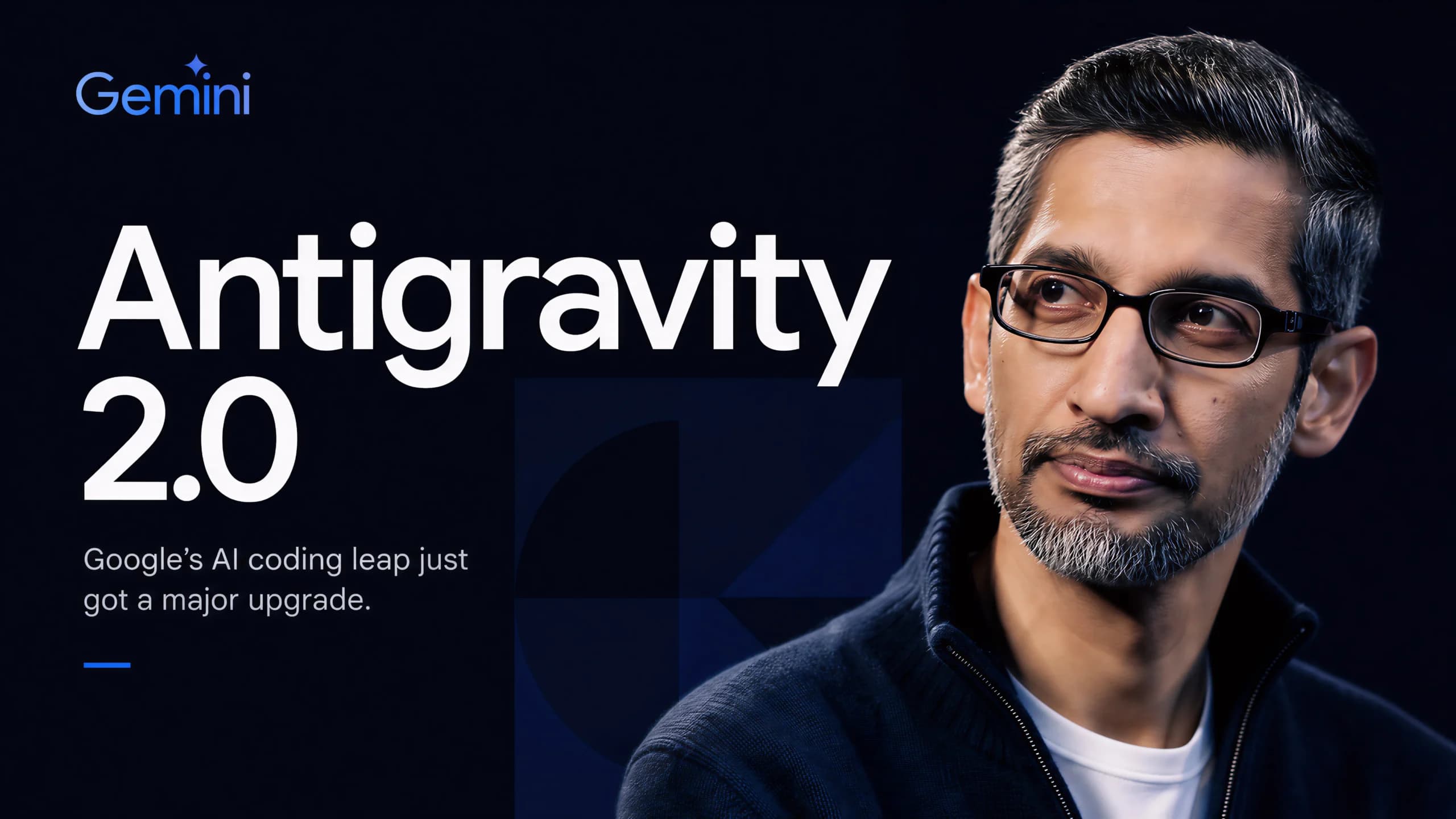
Google I/O 2026, which ran from May 19–20, 2026, delivered a monumental shift in Google's corporate direction. CEO Sundar Pichai set the stage during his opening keynote with a clear, defining vision:

Google I/O 2026, which ran from May 19–20, 2026, delivered a monumental shift in Google’s corporate direction. CEO Sundar Pichai set the stage during his opening keynote with a clear, defining vision: “AI should not be a destination you visit it should be the infrastructure you live inside.” Rather than showcasing AI as an external tool to query, Google’s 100+ announcements over the two-day event painted a picture of a world where AI is ambient, quiet, and deeply integrated into our physical and digital lives.
This year’s event went far beyond minor software iterations. The developer-focused tech giant unveiled the single biggest redesign of Google Search in 27 years, launched two pioneering Gemini model families, introduced a proactive 24/7 personal AI agent, and showcased physical, Gemini-powered smart glasses designed with world-class fashion houses. In tandem with these releases, Google debuted a premium $100/month AI power tier targeted at professional creators, developers, and power users.
Whether you are a startup founder, software engineer, digital marketer, or tech enthusiast, understanding these shifts is essential for navigating the next era of technology. This comprehensive breakdown of the major Google IO 2026 announcements translates Google’s vision into practical, real-world realities, showing you exactly how these tools will change your daily operations.
The Big Picture What Google I/O 2026 Was Really About
The overarching theme of Google I/O 2026 was the grand transition from conversational AI assistants to autonomous agentic AI systems. For years, users have interacted with AI via a reactive prompt-and-response loop. Pichai’s central message signals the end of that era. By embedding agentic workflows natively into Search, the Android operating system, developer tools, and consumer hardware, Google is building an ecosystem where AI acts on your behalf behind the scenes. AI is no longer just a chatbot; it is now the invisible, hyper-connected engine running your workflows, communications, and spatial experiences.
New Gemini Models What Google Launched
At the core of Google’s agentic ecosystem lies its upgraded suite of frontier models. Developed by Google DeepMind, these models are faster, more cost-effective, and highly multimodal, designed to perform complex operations with minimal latency.
Gemini 3.5 Flash — Speed Meets Intelligence
As the very first model in the new Gemini 3.5 series, Gemini 3.5 Flash is designed to combine frontier-level intelligence with lightning-fast agentic task execution. Google built this model specifically to handle autonomous workflows where speed is paramount. Excelling in real-time tasks, Gemini 3.5 Flash features capabilities that surpass Gemini 3.1 Pro across coding, agentic orchestration, and multimodal benchmarks. Remarkably, it operates at $4\times$ the speed of other comparable frontier models in output tokens per second. Gemini 3.5 Flash is generally available today across the Gemini app, Google Search, the Antigravity 2.0 platform, and the Gemini API.
Gemini 3.5 Pro Coming Next Month
While Flash handles high-velocity operations, Gemini 3.5 Pro is Google’s heavy lifter. Designed for deep reasoning, advanced data synthesis, and complex coding environments, Gemini 3.5 Pro is currently undergoing rigorous testing. Google announced that the model will be commercially available starting next month, offering businesses a robust engine for complex enterprise workflows.
Gemini Omni Create Anything From Any Input
Google DeepMind also showcased the Gemini Omni model, a brand-new model series that seamlessly bridges deep logical reasoning with creative generation. Gemini Omni natively accepts any combination of image, audio, video, and text inputs. What sets it apart is its output capability: Gemini Omni can generate high-fidelity video grounded in verified, real-world knowledge. Rather than outputting rigid synthetic media, the model’s video outputs are easily editable, giving developers and creators precise, granular control over AI-generated video assets.
Gemini Spark Google’s 24/7 Personal AI Agent
The most talked-about consumer release of the event was the Google Gemini Spark AI agent. Billed as a 24/7 personal AI agent for work, school, and daily life, Gemini Spark represents a quantum leap forward from Google Assistant. Unlike traditional digital helpers, Spark acts proactively. It continually scans and interacts with your connected Google services, quietly scheduling meetings, tracking tasks, organizing folders, and managing priorities in the background without requiring constant prompts.
To match this leap in capability, Google introduced a beautiful design overhaul called Neural Expressive. This design system gives the Gemini app fluid animations, vibrant colors, subtle haptic feedback, and clean, modern typography. The traditional interface has been simplified into a sleek, pill-shaped prompt box paired with a unified “plus” menu, signaling Gemini’s evolution from a simple text box into a comprehensive agentic workspace. Gemini Spark is available exclusively as part of Google’s brand-new premium subscription tier.
Google Search Gets Its Biggest Upgrade in 27 Years
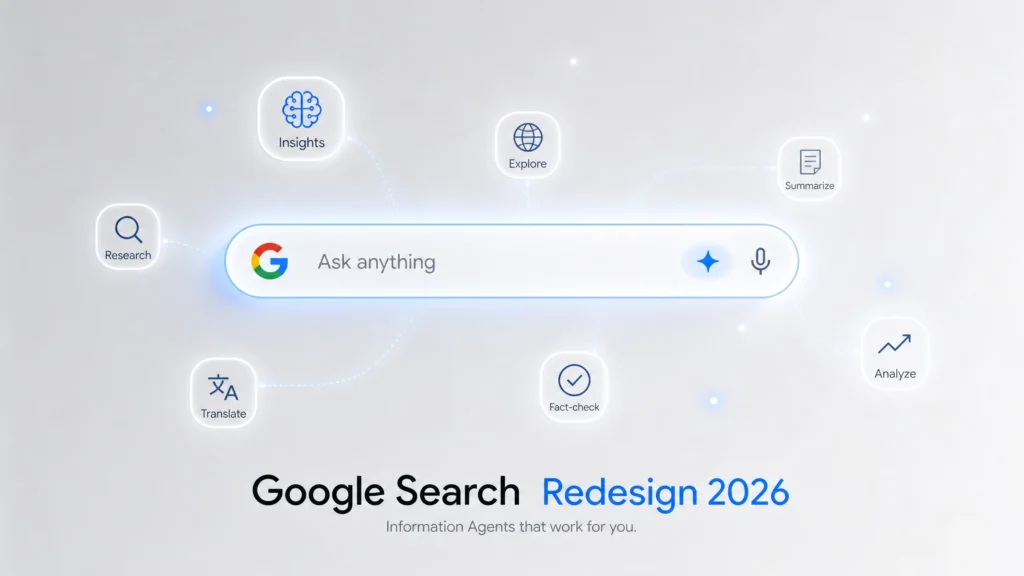
Google announced the Google Search upgrade 2026, marking the most radical transformation of the platform since its launch nearly three decades ago. Search is moving away from the classic list of blue links toward an immersive, AI-driven answers engine.
A dedicated AI Mode featuring specialized Information Agents is now embedded directly into Search. Rather than simply matching keywords to indexed pages, these Information Agents construct personalized research briefs based on your intent. To make results even more contextual, Search can securely pull data from your personal Gmail threads and Google Drive files. For example, searching for “flight options for my upcoming conference” will prompt the engine to retrieve your ticket booking details, combine them with live flight schedules, and coordinate the entire itinerary in real time. Additionally, Google’s AI Overviews have been expanded across a wider variety of complex and transactional queries, offering immediate answers to highly specific questions.
Smart Glasses Samsung, Gentle Monster, and Android XR

In a major bid to capture the physical computing market, Google unveiled its highly anticipated Google smart glasses 2026 initiative. Developed in deep partnership with Samsung, the new “Intelligent Eyewear” glasses are slated for a fall 2026 release.
To ensure the glasses appeal to everyday consumers, Google partnered with luxury eyewear designers Gentle Monster and Warby Parker. The physical design is remarkably thin and lightweight because the glasses feature no display screen. Instead, they are powered entirely by Gemini AI, utilizing spatial audio and built-in cameras. Users can get walking directions, send texts, and snap high-resolution photos hands-free, simply by speaking to their AI agent. This launch signals a major expansion of the Android XR ecosystem, moving Google’s spatial computing strategy beyond bulky headsets into stylish, daily-wear smart glasses. Google also highlighted XReal’s Project Aura as another key hardware partner expanding the reach of Android XR.
Universal Cart AI Comes to Shopping
Google is bringing its agentic vision to e-commerce with the launch of Universal Cart AI. This intelligent, cross-platform shopping cart continuously tracks deals, monitors discount codes, and compares shipping fees across multiple independent mobile apps and web storefronts. Universal Cart acts as a fundamental layer for agentic commerce. Instead of navigating separate checkouts on ten different retail websites, your personal AI agent can securely execute purchases across different platforms on your behalf using a single, unified payment method.
SynthID and Content Credentials Fighting AI Fakes
With AI media creation reaching unprecedented heights, Google emphasized digital safety and content authenticity. The company is dramatically expanding SynthID, its proprietary digital watermarking tool for AI-generated content. SynthID is moving beyond the closed sandbox of the Gemini app and is now embedded natively within Google Search and Google Chrome.
Furthermore, Google announced full system support for C2PA Content Credentials. This allows internet users to immediately inspect media metadata on Google platforms to verify whether an image or video is an original capture from a physical camera lens, or if it has been modified, edited, or completely generated using AI tools.
Google Antigravity The Developer Platform Reboot
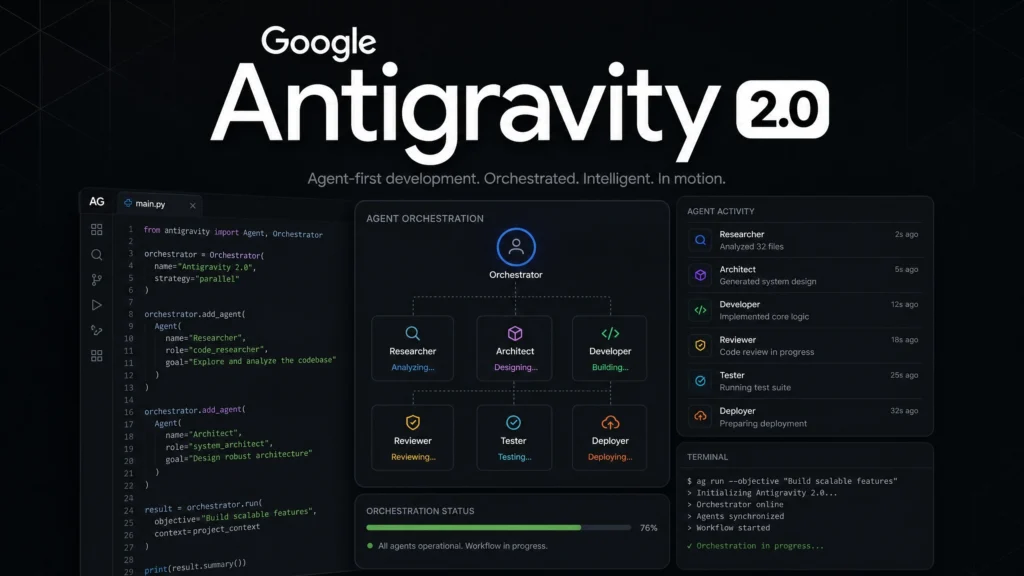
For developers looking to build on top of Google’s ecosystem, the Google Antigravity platform received a massive upgrade to accelerate the creation of autonomous software.
Antigravity 2.0 and the New CLI
Google Antigravity 2.0 has been rebuilt from the ground up as an agent-first development platform. It introduces sophisticated agent orchestration capabilities, allowing developers to connect multiple AI agents together to perform complex tasks. Accompanying the platform is the new Antigravity CLI, which lets engineers build, test, and run agent architectures directly from their local terminal lines.
Managed Agents
One of the standout technical releases is Managed Agents. Using a single API call, developers can instantly provision a remote, isolated Linux environment for their AI agents to execute tasks. Powered by the incredibly fast Gemini 3.5 Flash, these Managed Agents can securely compile code, execute scripts, and interact with operating systems within a safe sandbox, eliminating the need for developers to manage their own cloud virtual machines.
Migration Agent for Android Studio
To modernize legacy mobile software, Google introduced the Migration Agent in Android Studio. This specialized agent automatically refactors app code written in React Native, web frameworks, or iOS, converting it natively into clean, modern Kotlin. To supercharge ecosystem adoption, Google also announced the Build with Gemini XPRIZE Hackathon, featuring a massive $2 million prize pool — the largest developer hackathon prize pool in tech history.
New Creative and Productivity Tools
Alongside these platform shifts, Google refreshed its consumer and creative software suites with several major releases:
- Google Flow & Flow Music: Google’s real-time productivity and creative collaboration tools are now available as native mobile apps. Flow is in beta on Android (with iOS coming soon), and Flow Music has launched on iOS (with Android coming soon).
- Google Pics: A brand-new AI design and layout tool that allows creators to instantly construct professional marketing collateral, social assets, and vector graphics using simple natural language prompts.
- AI Inbox: A redesigned, highly cognitive email experience that automatically surfaces relevant links to Google Docs, Sheets, and Slides based on the context of your email threads.
- Ask YouTube: A conversational tool that completely reimagines how users find videos, letting them query YouTube’s massive library via detailed dialogue (e.g., “Find me a video showing how to fix a leaky pipe, specifically looking at the copper joint, and fast-forward to the tool selection part”).
- Workspace Voice Upgrades: Native, low-latency voice dictation and editing capabilities are now live across Gmail, Docs, and Keep, powered by specialized Google Keep AI, Google Docs AI, and Google Sheets AI agents.
What the $100/Month AI Ultra Plan Includes
To monetize this premium ecosystem, Google introduced the Google AI Ultra plan. Priced at a premium $100/month, this subscription targets developers, creators, and business power users who require absolute priority access to Google’s frontier technology.
The AI Ultra subscription includes:
- Full, unlimited access to the Google Gemini Spark AI agent.
- Priority, zero-throttling access to Gemini 3.5 Pro and Gemini Omni.
- Complimentary access to Managed Agents compute hours.
- Substantially higher rate limits and larger token allowances within Google AI Studio and the Gemini API.
- Native, agentic integration across Google Workspace apps, including advanced automated drafting in Google Docs, Sheets, and Slides.
What Google I/O 2026 Means for You
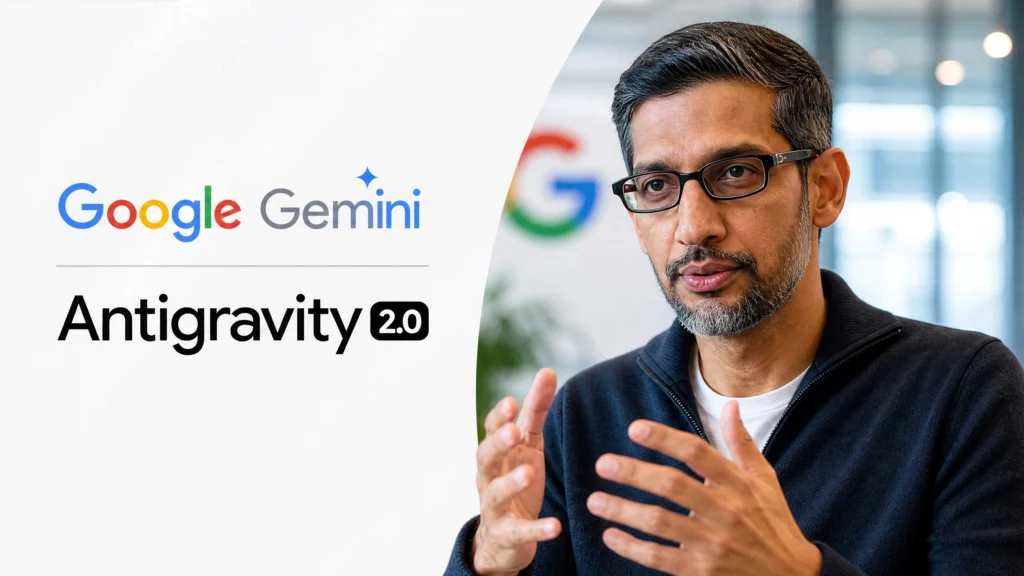
For developers and startups, Google I/O 2026 represents a massive simplification of the AI tech stack. With tools like Gemini 3.5 Flash and Managed Agents via Antigravity 2.0, you can deploy fully autonomous agentic applications without worrying about heavy infrastructure, sandboxing, or speed bottlenecks.
For digital marketers and SEO specialists, the Google Search upgrade 2026 changes the rules of the game. Optimizing for traditional keywords will no longer suffice. Brands must now learn how to optimize their content to be easily digested and cited by Google’s new Information Agents, who act as gatekeepers to consumer inquiries.
For everyday consumers and business owners, the rise of display-less smart glasses and proactive agents like Gemini Spark means technology is becoming ambient. Workflows, scheduling, communication, and commerce are shifting to the background, allowing humans to focus on creative strategy, physical interaction, and high-level execution.
Final Thoughts
Google I/O 2026 officially closed the book on reactive AI. By building an interconnected web of rapid models, autonomous agents, commerce hubs, and wearable hardware, Google is building the actual digital infrastructure of daily life. The transition to agentic AI is no longer a multi-year roadmap — it is a live, deployable reality. As these tools roll out over the coming months, the businesses and creators who learn how to orchestrate these agents will be the ones who lead the next economic wave.