Why Most Business Websites Fail in 2026 and How Agencies Fix Them
Many companies invest heavily in their digital storefronts, creating beautiful, professional-looking sites that unfortunately fail to generate leads, drive sales, or build customer trust. Despite look

Many companies invest heavily in their digital storefronts, creating beautiful, professional-looking sites that unfortunately fail to generate leads, drive sales, or build customer trust. Despite looking modern, these platforms often suffer from structural, technical, or strategic flaws that silently turn away potential customers before they even interact with the brand.
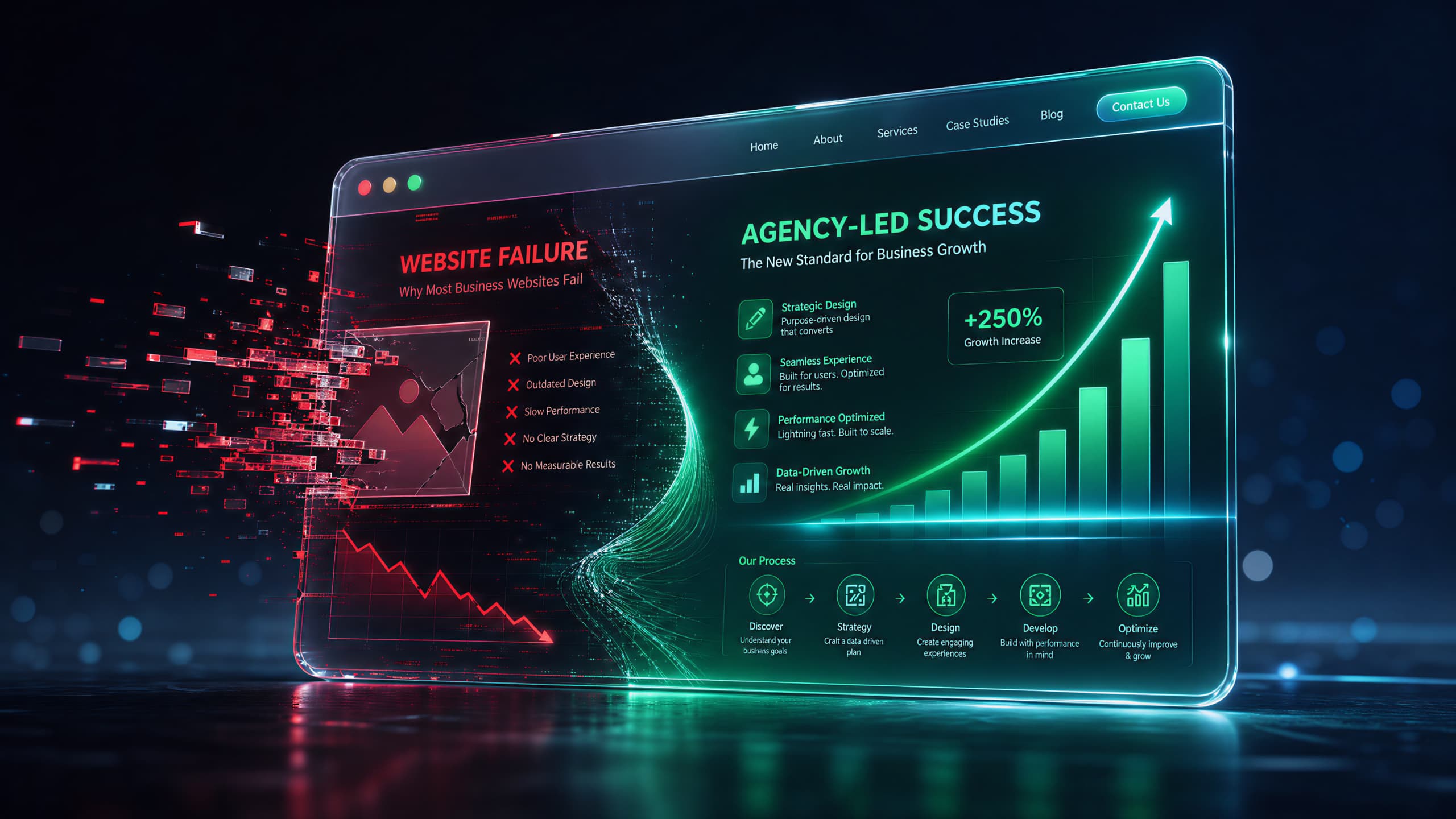
Common business website mistakes such as poor UX, painfully slow loading speeds, weak technical SEO, unclear calls to action, and outdated design significantly hurt growth. When a business website cannot effectively communicate its value or guide users seamlessly through the customer journey, it stops acting as an asset and becomes a liability, draining resources and allowing competitors to capture market share.
In this article, you will learn exactly why websites fail in the current competitive landscape and how professional agencies fix these hidden conversion problems. We will explore the specific technical and design errors hurting your online presence and show you how a strategic website redesign can transform your site into a high-performing lead generation engine.
Why Websites Fail in 2026
Websites fail in 2026 primarily due to rapidly rising user expectations, the absolute dominance of mobile-first behavior, shifts in AI search algorithms, intensifying SEO competition, and stricter performance standards like Core Web Vitals. Visitors now demand instant loading times, hyper-personalized experiences, and intuitive navigation; when a site lacks a clear conversion strategy or fails to meet these technical benchmarks, users instantly abandon it for a competitor, signaling to search engines that the site provides a poor experience.
What Are Business Website Mistakes?
Business website mistakes are fundamental design, content, technical, SEO, UX, and conversion issues that prevent users from trusting a brand or taking a desired action. These errors can range from a confusing landing page layout and broken links to missing security signals and weak messaging, all of which create severe friction in the customer journey and directly result in lost revenue and wasted website traffic.
The Biggest Business Website Mistakes That Hurt Growth
1. Outdated Website Design
An outdated website instantly makes a business look inactive, unprofessional, or less trustworthy to modern consumers who judge a brand’s credibility within milliseconds. Relying on poor design, old layouts, and weak branding drives users away, which is why a professional website redesign is often the first crucial step in modernizing a company’s image and re-engaging its target audience.
2. Poor User Experience and Confusing Navigation
Bad UX and confusing website navigation create immense frustration, making it difficult for visitors to find the information they need to make a purchasing decision. An unclear page hierarchy and a poorly mapped customer journey inevitably increase the bounce rate, destroy user engagement, and drastically reduce the volume of incoming leads.
3. Slow Website Speed and Poor Core Web Vitals
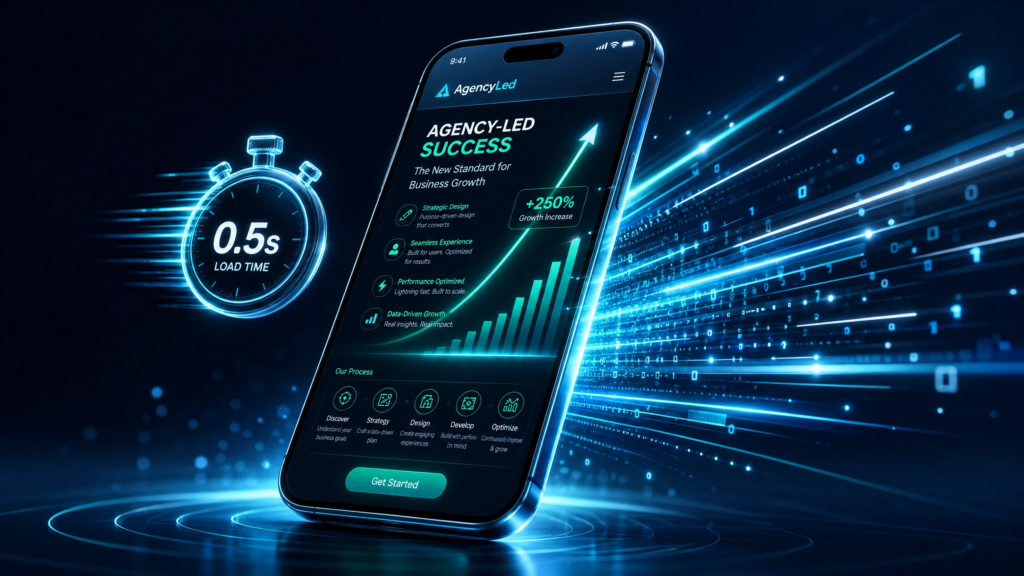
Slow page speed and poor Core Web Vitals are major conversion killers that frustrate users and heavily penalize your SEO rankings. Because Google heavily weighs these performance metrics as ranking signals, poor website speed directly reduces your organic visibility and causes mobile users to abandon the site before it even finishes loading.
4. Weak Mobile Responsiveness
With the vast majority of consumers now browsing and shopping from smartphones, weak mobile responsiveness severely damages the user experience and overall conversion rate. If a site requires pinching, zooming, or sideways scrolling, it will lose organic traffic and alienate a massive segment of potential buyers.
5. Unclear Call to Action
Website conversion problems often stem directly from weak CTAs, hidden buttons, and unclear next steps that leave visitors wondering what to do next. When a landing page fails to explicitly guide the user toward a purchase, subscription, or contact form, it significantly reduces lead generation and wastes valuable website traffic.
6. Poor SEO and Technical SEO Issues
Weak SEO, missing meta tags, poor internal linking, and persistent broken links render a website virtually invisible to search engines. Technical SEO problems and indexing issues prevent Google from properly crawling the site, drastically reducing website traffic and burying the business beneath competitors in organic search results.
7. Weak Content Strategy
Thin content, unclear messaging, missing dedicated landing pages, and a poor blog strategy stop both users and Google from fully understanding what a business offers. A weak content strategy with poor keyword targeting fails to answer customer questions, meaning the site cannot capture high-intent organic traffic or establish industry authority.
8. Missing Trust Signals
Missing trust signals—such as client testimonials, detailed case studies, verified reviews, transparent contact details, and secure HTTPS connections—critically damage a company’s credibility. Without these essential security signals and real business information, cautious consumers will refuse to hand over their payment details or personal data.
9. No Analytics or Performance Tracking
Many businesses fail online simply because they do not track vital metrics via Google Analytics and Google Search Console. Without monitoring conversion rate, bounce rate, organic traffic, and user behavior, companies are flying blind, unable to identify UX friction points or measure the true return on investment of their digital marketing efforts.
10. Poor Website Maintenance
Neglecting website maintenance leads to a slow accumulation of outdated plugins, broken links, unpatched security issues, and technical errors that degrade performance over time. This technical debt causes slow pages and serves outdated content to users, ultimately destroying the site’s functionality and search engine rankings.
Bad Website Examples: What Failing Websites Usually Have in Common
When analyzing bad website examples, several common patterns consistently emerge that repel modern consumers and ruin conversion rates. These failing sites typically suffer from cluttered layouts, confusing navigation menus, agonizingly slow pages, weak CTAs, poor mobile design, outdated visuals, a complete lack of trust signals, and unclear messaging that leaves the visitor completely guessing what the company actually does.
How Agencies Fix Website Conversion Problems
A professional website design agency, UX design agency, or web development agency fixes website conversion problems by conducting comprehensive audits to identify exact drop-off points in the user journey. By implementing targeted landing page optimization, strategic CTA improvements, advanced speed optimization, rigorous SEO web development, and data-driven analytics tracking, these experts systematically eliminate friction and guide visitors toward conversion.
How a Website Redesign Agency Improves User Experience
A website redesign agency fundamentally improves UX by restructuring the site’s architecture for better navigation, implementing flawless responsive design, and establishing a clear visual hierarchy. Through faster loading times, cleaner layouts, better content flow, and a deeply researched customer journey, they ensure that every interaction feels intuitive and effortless for the end user.
How SEO Web Development Helps Business Websites Grow
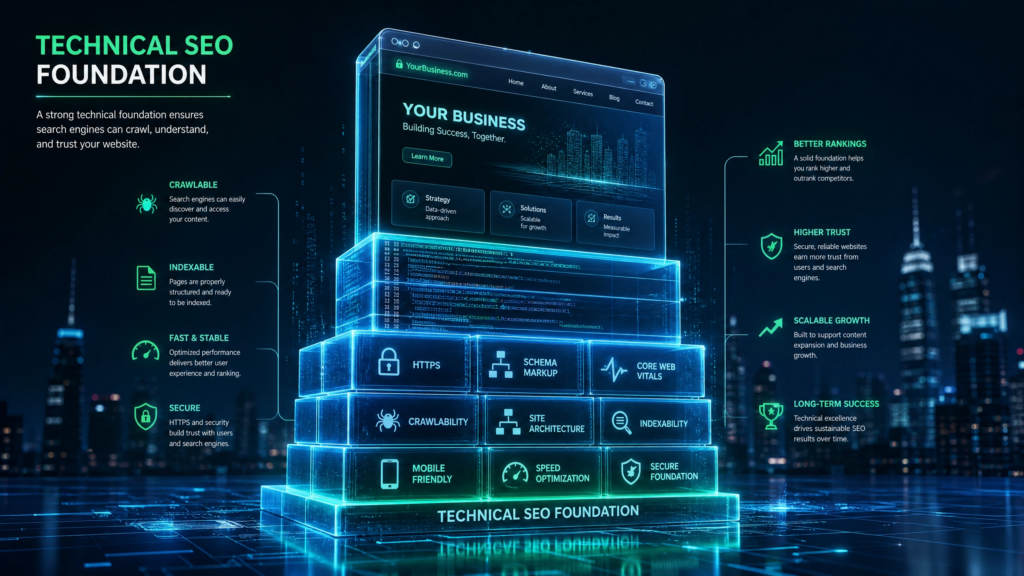
SEO web development serves as the foundation for digital growth by combining clean, lightweight code with advanced technical SEO practices to maximize search visibility. By implementing structured schema markup, optimizing Core Web Vitals, structuring internal linking, adding keyword-rich meta tags, and ensuring a secure HTTPS, Google-friendly structure, developers drastically increase sustainable organic traffic.
Why AI Website Audits Matter in 2026
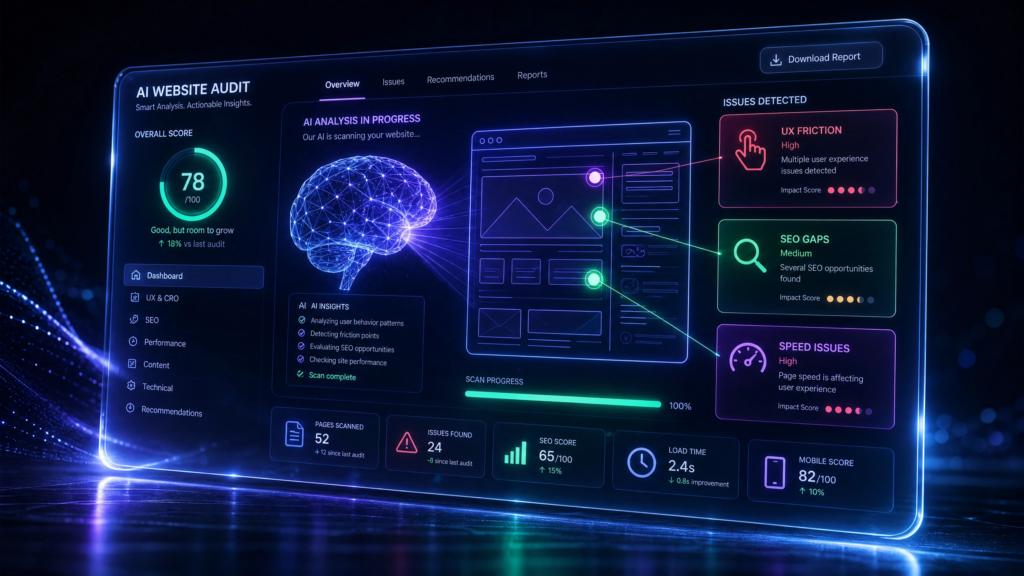
AI website audits matter in 2026 because they empower agencies to rapidly and accurately identify deep-seated design issues, SEO problems, and technical errors that human analysts might miss. These intelligent tools instantly map out page speed problems, content gaps, UX friction, broken links, and hidden conversion opportunities, allowing for faster, more effective optimization strategies.
Professional Website Redesign Checklist
- Audit user experience and navigation
- Improve mobile responsiveness
- Optimize Core Web Vitals and page speed
- Fix technical SEO and broken links
- Improve landing pages and CTAs
- Add trust signals
- Update content strategy
- Improve security and HTTPS
- Connect Google Search Console and Google Analytics
- Set up conversion tracking
When Should You Hire a Website Design Agency?
A business should hire a website design agency, UX design agency, website redesign agency, or web development agency when it experiences stagnant growth, poor conversions, or an outdated website that no longer reflects the brand. If your site suffers from low organic traffic, a high bounce rate, a poor mobile experience, or persistent technical SEO issues, it is time to bring in professionals to rebuild your digital presence into a profitable asset.
Final Thoughts
In an increasingly competitive digital landscape, critical business website mistakes—from poor UX and slow load times to weak SEO and unclear messaging—are exactly why most business websites fail to generate meaningful revenue. By recognizing these pitfalls and partnering with specialized agencies to execute technical improvements, AI audits, content strategy refinement, and conversion rate optimization, brands can successfully execute a professional redesign that transforms an underperforming site into a powerful engine for long-term growth. As the saying goes, “Your website is your greatest digital asset; don’t let it become your biggest liability.”
Frequently Asked Questions
Conclusion:
Most business websites fail in 2026 not because they lack visual appeal, but because they suffer from foundational “silent killers” such as poor user experience (UX), slow page speeds, weak technical SEO, and unclear calls to action. These hidden friction points frustrate modern users—who expect instant, mobile-friendly interactions—and cause search engines to penalize the site’s rankings.
To fix these issues, professional agencies move beyond basic aesthetics. They use AI audits, strict SEO web development, and strategic conversion rate optimization (CRO) to rebuild the site. By optimizing Core Web Vitals, fixing technical errors, and creating a seamless customer journey, agencies transform an underperforming digital brochure into a high-speed, fully optimized lead-generation engine.