10 Features Every Modern Business Website Needs
A modern business website is no longer a static online brochure where a company simply lists its office hours and a basic services menu. Instead, it must serve as an active engine for growth that buil

A modern business website is no longer a static online brochure where a company simply lists its office hours and a basic services menu. Instead, it must serve as an active engine for growth that builds instant trust, guides visitors through a clear digital experience, ranks highly on Google search results, and consistently generates qualified leads. If your website fails to engage visitors within the first few seconds, they will simply click away to a competitor.
Achieving these outcomes requires a strategic combination of key business website features that address both user experience and technical performance. Elements like mobile-friendly responsive design, intuitive UX, technical SEO, lightning-fast page speed, strategic calls to action (CTAs), robust security, and deep web analytics are no longer optional extras. They are the core infrastructure that defines whether your digital presence succeeds or struggles in a crowded market.
In this guide, we will break down the ten essential features every modern business website needs to maximize its visibility, credibility, and conversion rates. Whether you are building a new platform from scratch or planning a strategic redesign with a web development agency, these core components will help you build an asset that turns casual visitors into loyal customers.
Why Modern Business Website Features Matter
Modern website design is no longer just about aesthetics; it must seamlessly integrate user experience, SEO, technical performance, conversion rate optimization (CRO), and trust signals to support real-world business goals. A beautiful website is useless if nobody can find it on Google, and a high-traffic site is ineffective if it fails to convert visitors into paying clients. By focusing on holistic features that satisfy both human users and search engine algorithms, businesses can construct a high-performing digital sales funnel that operates 24/7.
What Makes a Business Website Professional?
A truly professional website immediately communicates credibility, loads within milliseconds, works flawlessly across all mobile devices, and speaks directly to the target audience’s pain points. It eliminates friction by offering clear, intuitive layouts that guide the customer journey, making it simple for visitors to find the information they need and take the next step. Ultimately, professional website design bridges the gap between branding and functional technology, turning your online home into a secure, lead-generating asset.
10 Essential Business Website Features
1. Clear and Modern Website Design
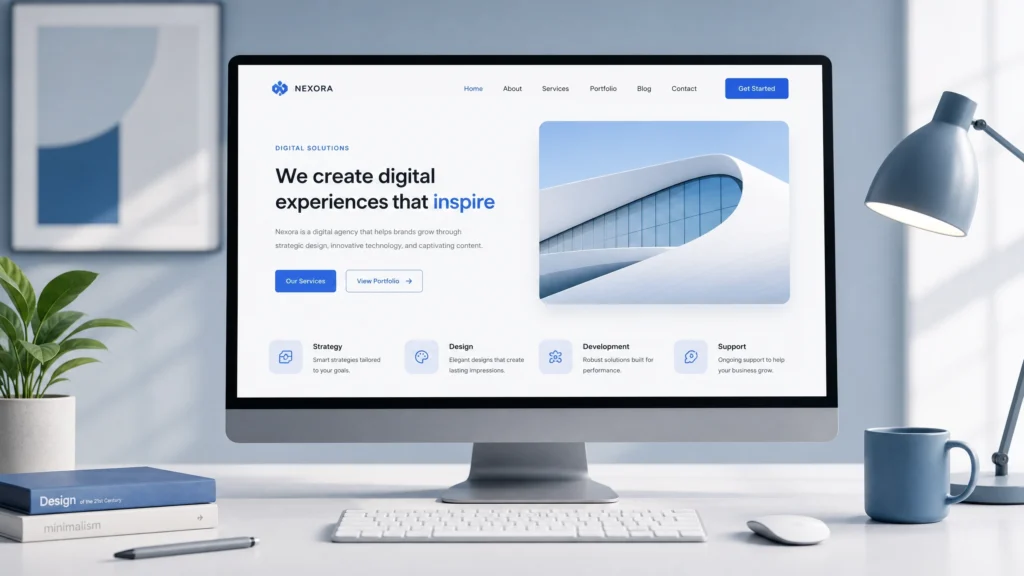
Your website’s visual appeal establishes a first impression within milliseconds, making modern website design critical for building instant brand credibility. A clean UI design with a well-defined visual hierarchy allows users to process information naturally, reducing cognitive overload and improving the overall user experience. By utilizing ample white space, high-quality professional imagery, and readable typography, you project an authoritative brand image that sets the stage for meaningful customer relationships.
2. Mobile-Friendly Responsive Design
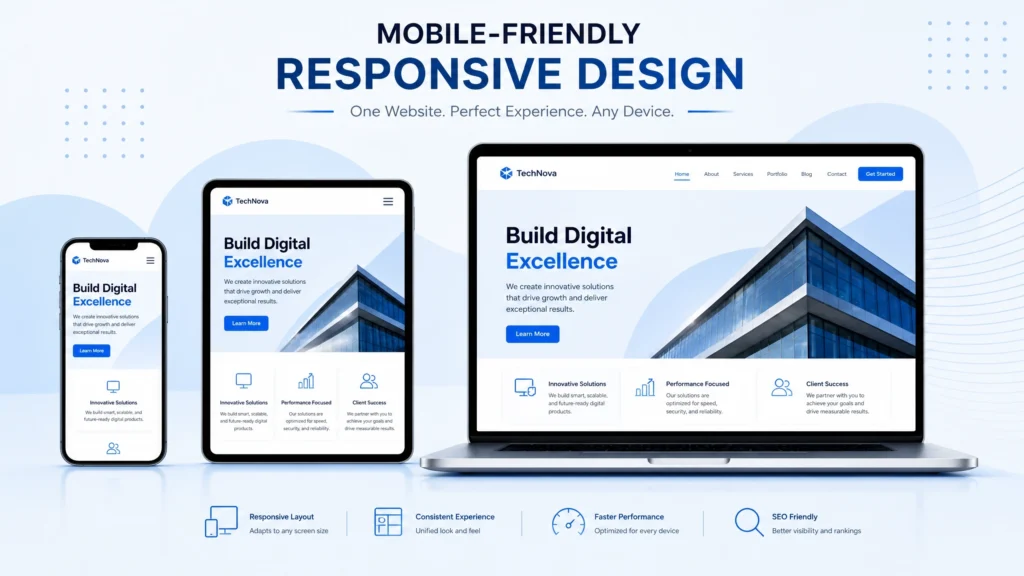
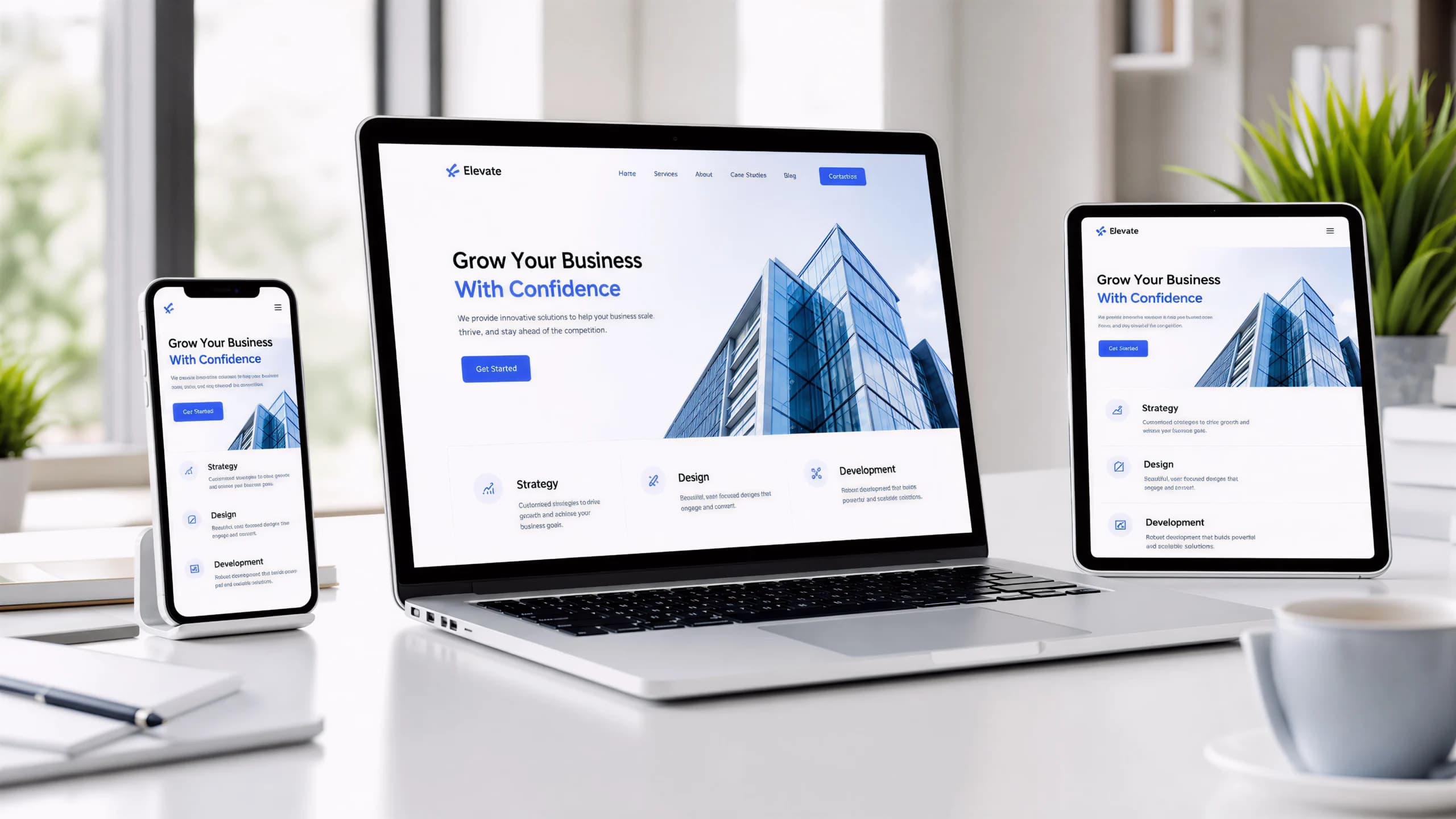
With more than half of all global web traffic originating from mobile devices, responsive website development is a foundational requirement for any online business. A mobile-friendly website automatically adapts its layout, images, and navigation elements to suit any screen size, ensuring a seamless user experience whether someone is browsing on a smartphone, tablet, or desktop. This adaptability not only satisfies user expectations and drives higher mobile conversions but also satisfies Google’s mobile-first indexing, which is crucial for maintaining your search engine visibility.
3. Simple Website Navigation
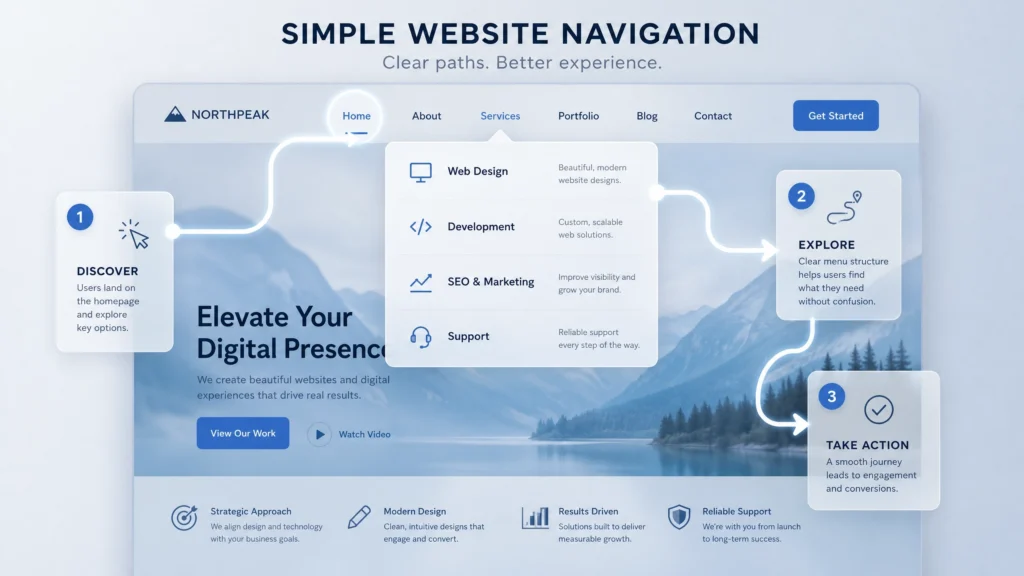
Complex layouts frustrate visitors and lead to high bounce rates, which is why clear website navigation is vital for keeping users engaged. A professional business website should feature a streamlined main menu that effortlessly guides users to essential sections—including the homepage, service pages, about page, contact page, and targeted landing pages. Organizing this structure logically allows users to self-segment and progress through your sales funnel without friction, drastically increasing the likelihood of conversion.
4. Strong Calls to Action

A call to action (CTA) acts as a digital signpost that guides the customer journey and encourages active engagement, making it a cornerstone of conversion optimization. Whether your objective is driving lead generation, scheduling consultations, securing bookings, or prompting direct sales inquiries, your CTAs must be visually distinct, action-oriented, and strategically placed. Highly visible buttons paired with simple, low-friction forms make it incredibly easy for prospects to take action, directly boosting your site’s overall conversion rate.
5. Fast Website Speed and Core Web Vitals
Even a minor delay in page load time can destroy your user experience and send bounce rates soaring, making website speed a critical metric for business growth. Google emphasizes website performance through its Core Web Vitals metrics, which measure loading speed, interactivity, and visual stability. Optimizing your website’s performance by compressing assets, utilizing fast hosting, and writing clean code directly enhances UX, improves Google visibility, and drives more conversions.
6. SEO-Friendly Website Structure
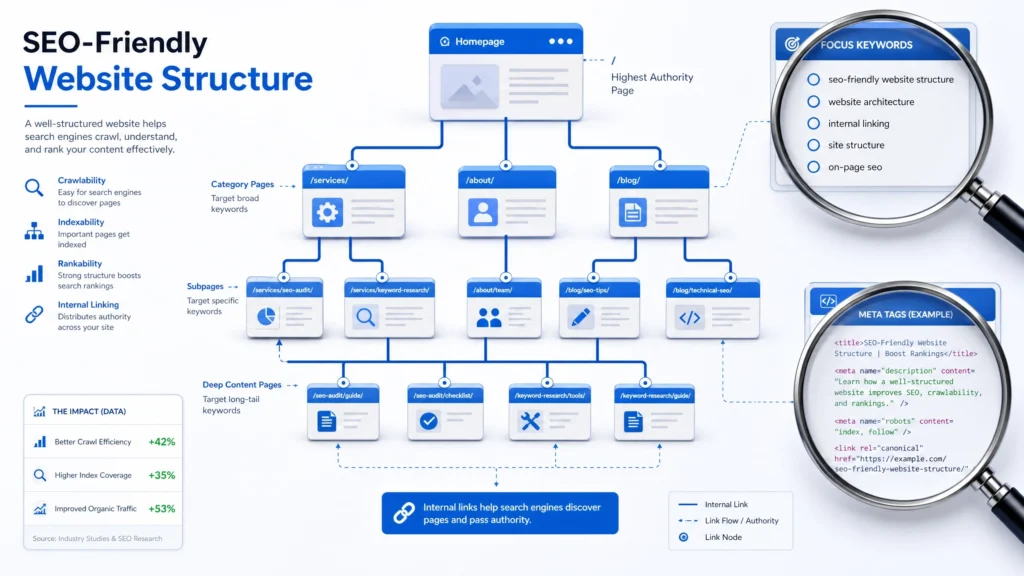
To ensure your target audience can find you, your digital foundation must incorporate technical SEO and on-page SEO from the ground up. This involves establishing a logical content structure, using accurate meta titles and meta descriptions, implementing schema markup for search engines, and building a cohesive internal linking web. Consistently monitoring performance through Google Search Console allows you to optimize your search appearance, helping your services rank at the top of relevant search results.
7. Trust Signals and Brand Credibility
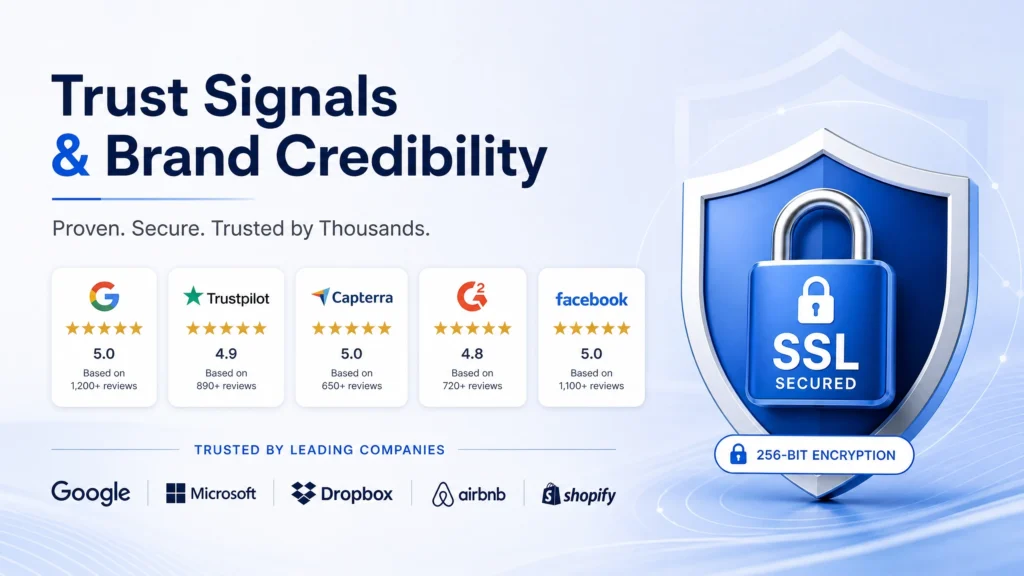
Before visitors buy from you, they must trust you, which makes showcasing prominent trust signals an essential conversion booster. You can establish immediate brand credibility by displaying client testimonials, detailed reviews, in-depth case studies, portfolios of past work, and recognizable client logos. Additionally, secure elements like an SSL certificate (indicated by HTTPS in the URL) and clear contact information assure visitors that your business is legitimate and that their data is protected.
8. High-Quality Content and Blog Strategy
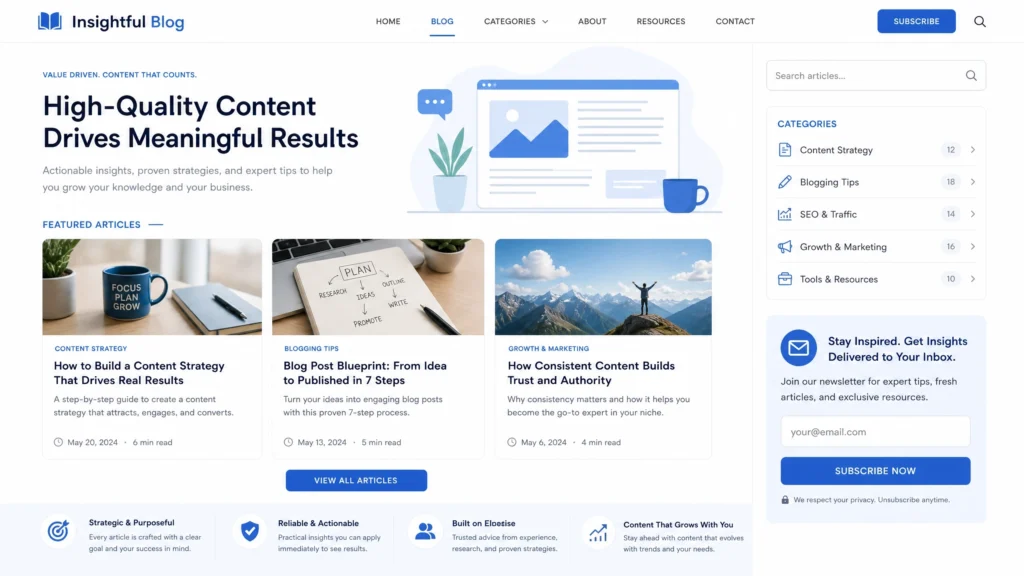
A successful content strategy relies on publishing highly informative service pages, optimized landing pages, and a regular blog to educate your market and target high-intent search queries. Delivering helpful, practical content not only positions your company as an industry authority but also creates rich opportunities for keyword-focused SEO and internal linking. This steady flow of useful information helps attract qualified organic traffic and nurtures prospects throughout their decision-making process.
9. Analytics, Tracking, and Conversion Measurement
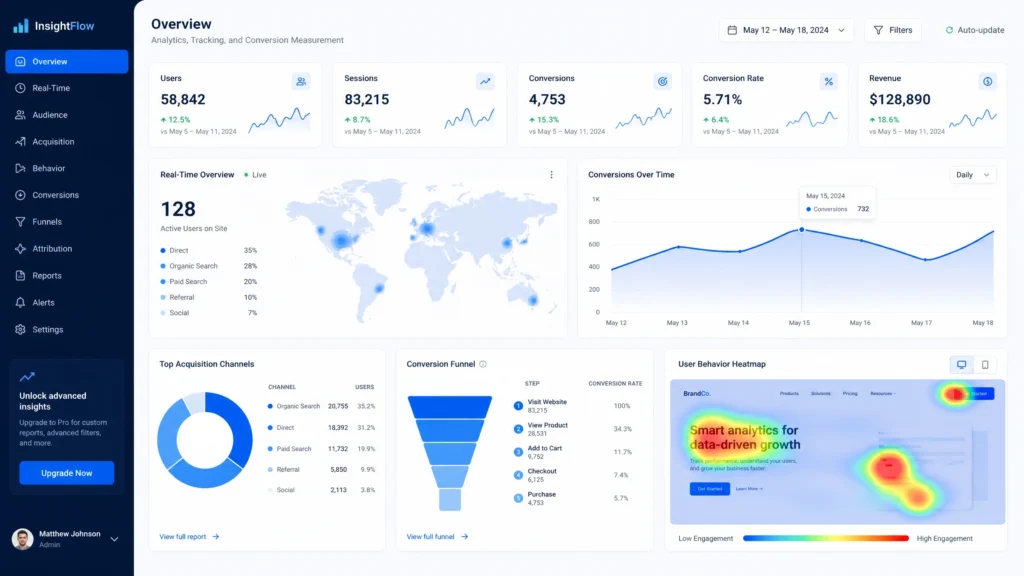
You cannot optimize what you do not measure, which is why integrating robust analytics tools like Google Analytics and Google Search Console is non-negotiable. Setting up tracking for key conversion events—such as contact forms, downloads, and chatbot interactions—provides priceless data on how visitors move through your customer journey. Analyzing this website traffic allows you to make data-driven marketing decisions, identify drop-off points, and constantly refine your digital strategy for maximum ROI.
10. Security, Maintenance, and Smart Features

Website security is paramount to safeguarding customer data, maintaining brand trust, and ensuring continuous site availability. Implementing a secure HTTPS protocol via an SSL certificate, executing routine website maintenance, and performing automated backups protect your digital asset from malware, software vulnerabilities, and downtime.
To further elevate the user experience, integrating smart features like an intuitive search functionality and a responsive chatbot can provide immediate assistance to visitors. Deploying a modern AI chatbot allows you to offer 24/7 customer support, capture leads, and answer common questions instantly, turning your website into an active, automated customer service portal.
SEO Website Checklist for Modern Business Websites
- SEO-friendly URL structure (short, clean, and keyword-rich links)
- Optimized meta titles and meta descriptions to drive organic CTR
- Clear H1, H2, and H3 headings for clean logical hierarchies
- Schema markup to help search engine crawlers understand context
- Internal linking to share page authority across your site
- Fast page speed and optimized Core Web Vitals performance
- Mobile-friendly responsive design for all devices
- Image alt text optimized with semantic descriptions and keywords
- Google Search Console setup to index pages and monitor search errors
- Google Analytics setup to track and analyze visitor traffic
- Secure HTTPS website using a valid SSL certificate
- Helpful content structure focusing on readability and search intent
Website UX Features That Improve Conversions
Incorporating deliberate website UX features is the most effective way to turn passive readers into active leads. Features such as clear, sticky navigation, clean and readable typography, high-contrast CTAs, and rapid-loading pages dramatically reduce friction during the customer journey. When paired with intuitive contact forms, distraction-free landing pages, and automated chatbot assistance, these user experience elements streamline the path to purchase, creating a high-converting digital environment that maximizes your ROI.
Web Design Trends Businesses Should Follow
Staying competitive requires adopting modern web design trends that prioritize efficiency, user-friendliness, and real-world utility without sacrificing performance. Key trends include minimalist layouts, highly visible visual hierarchies, digital accessibility compliance, and personalized landing pages tailored to specific target audiences. Integrating helpful AI chatbots and adopting a mobile-first, content-first design approach ensures that your site is built to serve the modern user, placing trust-focused elements at the forefront of the design.
How a Web Development Agency Builds Better Business Websites
Partnering with a professional web development agency or a specialized agency website design team ensures that your site is built on a foundation of expert strategy and technical execution. These teams excel at balancing UX/UI design with clean, responsive development, ensuring your site is fully optimized for speed, security, and conversion rates. By handling complex requirements like technical SEO, custom analytics tracking, and seamless API integrations, an experienced agency saves you valuable time and delivers a high-performing digital platform that drives business growth.
Business Website Features Checklist
- Professional homepage that instantly states your value proposition
- Clear service pages outlining exactly what your business offers
- Strong about page displaying your story, values, and credentials
- Easy contact page with direct access to contact details and support
- Responsive design tested across phones, tablets, and laptops
- Fast loading speed optimizing critical rendering paths
- Clear CTA buttons visible above and below the fold
- Trust signals including social proof, testimonials, and case studies
- SEO setup including on-page optimization and indexing plans
- Blog/content strategy focused on valuable, educational content
- Analytics and tracking integrations to record customer actions
- Secure HTTPS to build confidence and safeguard interactions
- Website maintenance plan for ongoing backups and platform updates
- Optional AI chatbot to capture leads and guide visitors 24/7
Final Thoughts
Building a high-performing business website requires balancing aesthetics, technical stability, and strategic user engagement. Prioritizing essential business website features—such as modern design, mobile responsive development, technical SEO, rapid page speed, clear CTAs, robust analytics, and reliable security—creates an asset that continuously generates leads and builds brand credibility. By maintaining your site and investing in professional UX, you ensure your platform remains a powerful engine for long-term commercial growth.