Artificial Intelligence inCybersecurity: The Double-EdgedSword Reshaping Digital Security
The Game Has Changed A few years ago, a hacker needed real technical skills to launch a serious cyberattack. Today, that is no longer true. Artificial intelligence has made it possible for almost anyo

The Game Has Changed
A few years ago, a hacker needed real technical skills to launch a serious cyberattack. Today, that is no longer true. Artificial intelligence has made it possible for almost anyone to run attacks that used to require a team of experts. At the same time, the companies being attacked are using the same AI technology to protect themselves.
This is not a future problem. It is happening right now, in 2026, across every industry and AI security threats are growing faster than most organizations expected.
How Hackers Are Using AI
1. Phishing Emails That Feel Personal
Most people have learned to spot a basic phishing email. Bad grammar, strange greetings, urgent requests from unknown senders these were the warning signs we all knew. AI has quietly removed every single one of them.
Today, attackers feed information from LinkedIn profiles, company websites, and social media into AI tools. Within minutes, those tools generate hundreds of emails that reference real colleagues, recent projects, and actual company events. These phishing attacks feel like they were written by someone sitting two desks away from you.
Security teams trained on old phishing examples are struggling to keep up. The emails simply look too real, and that is the whole point.
2. Fake Voices and Video Calls
AI can now copy a person’s voice from just a few minutes of public recordings. Attackers have used this to call employees, pretending to be their manager or company CEO, instructing them to transfer money or share login details. The voice sounds right. The tone sounds right. Everything sounds right because it was built to.
In some cases, attackers have gone even further, using fake video calls where a deepfake version of an executive appears on screen in real time. Employees approve requests they would never approve otherwise, simply because they believe they are talking to someone they recognize.
3. Malware That Rewrites Itself
Traditional security tools look for known threats. They compare files and programs against a list of dangerous code patterns. If something matches, it gets blocked. It is a system that worked well for years.
AI-powered malware gets around this entirely by rewriting its own code every time it runs. The behavior stays the same stealing data, recording keystrokes, opening back doors but the code looks completely different each time. No match means no block. Malware detection tools built on old methods simply cannot keep up with this.
A proof-of-concept program called BlackMamba demonstrated this clearly in 2023. It used an AI model to regenerate its malicious code on every single run. Each version looked brand new to security scanners while doing exactly the same damage underneath.
4. Automated Scanning for Weak Points
Finding a weakness in a system used to take days or weeks of careful manual work. AI has compressed that timeline in a way that most organizations have not fully come to terms with yet.
Attackers now use AI agents that automatically scan websites, applications, and networks, testing thousands of entry points, learning from each attempt, and reporting back on which ones are most likely to succeed. What used to take a skilled person several days can now happen overnight while the attacker is asleep.
5. Tricking AI Tools From the Inside
As more companies build AI assistants and chatbots for internal use, a new type of attack has emerged that most people have not heard of yet. Attackers craft specific inputs designed to trick an AI system into doing something it was never supposed to do sharing private data, bypassing rules, or taking actions without authorization.
This is called prompt injection. It is now considered one of the top AI security threats for any organization using AI tools internally, and most companies are not yet defending against it properly.
How Defenders Are Fighting Back
1. Watching Behavior Instead of Just Signatures
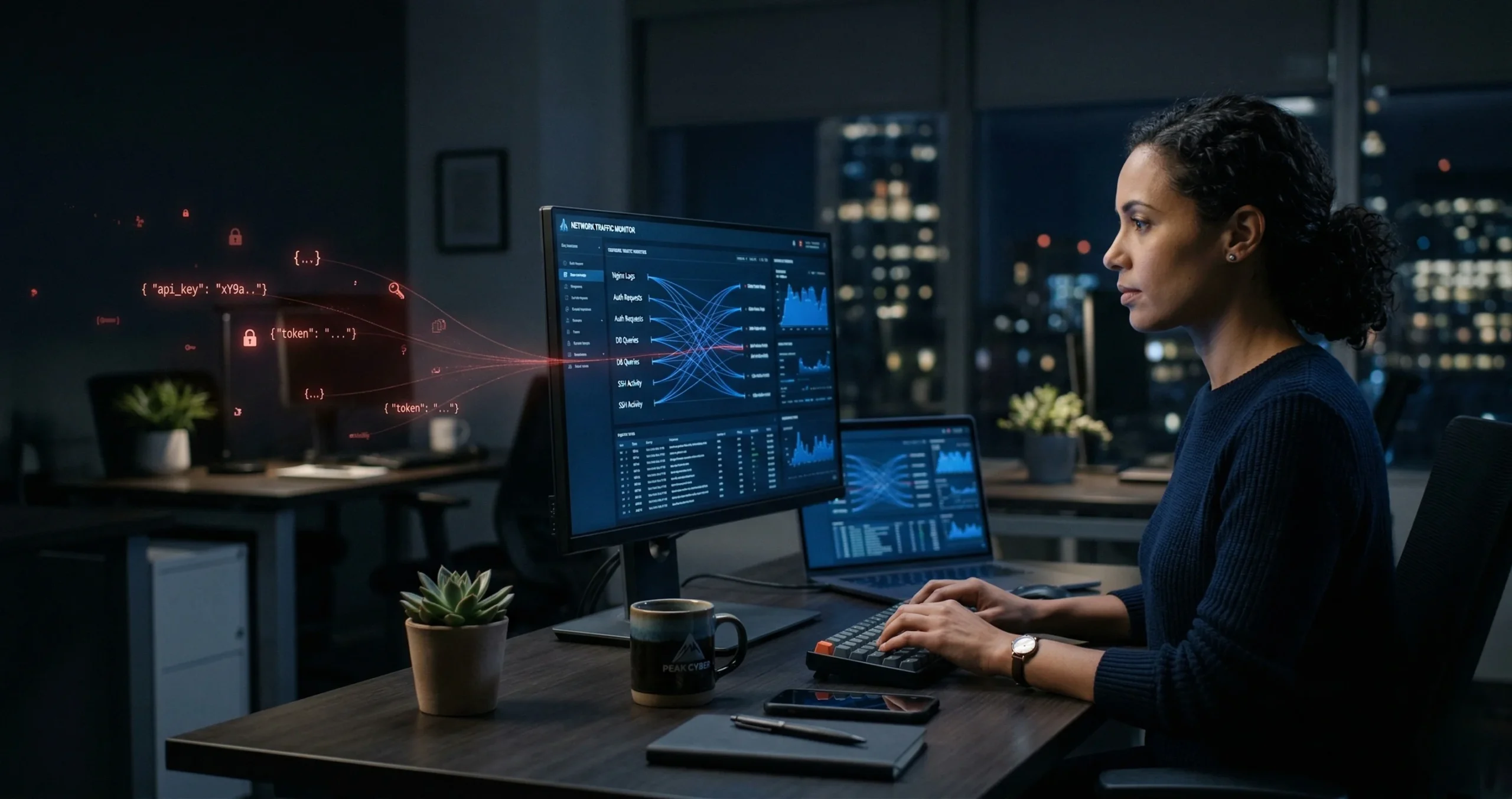
The response to AI cyberattacks cannot rely on matching known threats alone. Defenders are shifting toward systems that watch what is happening across a network and flag anything that seems out of place even if it has never been seen before.
This means building a detailed picture of what normal activity looks like for a specific organization, then using AI to catch anything that does not fit. An unusual login time, a large file being copied to an outside location, a process running somewhere it has never run before these signals can catch attacks that traditional malware detection tools walk straight past.
2. Zero Trust Verify Everything, Trust Nothing
Zero trust is a security approach built around one straightforward idea: do not automatically trust anyone or anything, even if they are already inside your network.
Every user, every device, and every connection must continuously prove that it belongs there. If an attacker gets into one part of a system, they cannot simply walk into other parts without being verified again. This limits how much damage a single compromised account or device can actually cause.
3. Teaching AI to Attack So It Can Defend Better
One of the most effective defensive approaches is using AI to simulate real attacks against your own systems before a genuine attacker gets the chance. Security teams run AI-generated phishing attacks, fake malware variants, and automated scanning against their own infrastructure not to cause damage, but to find the gaps first.
The more realistic the simulation, the stronger the detection becomes. This approach takes the attacker’s own playbook and turns it into training material for the defense.
4. The Three Pillars of AI Defense
Researchers at MIT Sloan have outlined a framework that brings this all together. It rests on three areas that need to work in combination, not in isolation.
The first is automated hygiene systems that patch themselves, monitor themselves, and operate on zero-trust principles without needing a human to trigger every action.
The second is autonomous defense AI systems that detect AI security threats and respond to them in real time, without waiting for someone to notice something is wrong.
The third is executive oversight real-time reporting that gives business leaders an honest and current picture of their actual risk, not a summary from last month’s audit.
The researchers are clear on one point: AI tools alone are not the answer. Human judgment, proper governance, and timely intelligence all need to work alongside the technology for any of it to hold.
What This Means Going Forward
The honest reality is that AI has made both attacking and defending easier. The attackers who move quickly, experiment constantly, and automate everything will find gaps. The defenders who genuinely understand how AI cyberattacks work not just in theory but in practice will be the ones who close those gaps before real damage is done.
The organizations most at risk right now are the ones still treating cybersecurity 2026 as something to worry about later. The attacks are not on their way. They are already here.
Every organization using AI tools internally needs to understand prompt injection. Every company relying only on signature-based malware detection needs to add behavioral analysis. Every security team needs people who have actually worked with AI-assisted attacks, not just people who have read about them in a summary.
A Final Thought
AI has shifted the balance in cybersecurity, but it has not made defense impossible. What it has made impossible is standing still. The organizations that keep learning, keep testing their own defenses, and keep updating how they think about AI security threats will be the ones still standing when others have been breached.
The technology is the same on both sides of this. What separates the attackers from the defenders is not the tools. It is how fast each side is willing to learn.