
Social Media Marketing Strategy for Small Business
Social media strategy for small business has become essential for building a strong online presence, especially for startups and local brands competing in a digital-first world. A well-planned approac

Social media strategy for small business has become essential for building a strong online presence, especially for startups and local brands competing in a digital-first world. A well-planned approach is no longer optional—it’s a core part of digital marketing for small business success. With millions of users active on platforms like Facebook, Instagram, and TikTok, businesses now have direct access to their ideal audience.
However, many small business owners struggle to create a structured approach and often rely on random posting without clear goals. This leads to low engagement, poor reach, and wasted effort. A proper social media marketing strategy for small businesses focuses on consistency, audience targeting, and content planning to ensure every action contributes to growth.
In this guide, you will learn how to build an effective social media strategy for small business, choose the best platforms, create engaging content, and optimize performance. Whether you are starting from scratch or improving your current efforts, this roadmap will help you achieve better results with both organic and paid strategies.
Introduction to Social Media Marketing for Small Businesses
Social media marketing for small business involves using platforms like Facebook, Instagram, and LinkedIn to promote products, build brand awareness, and connect with customers, making it one of the most effective and affordable digital marketing methods available today.
Why Social Media Marketing is Important for Small Business Growth
A strong social media strategy for small business helps increase visibility, drive traffic, and generate leads, allowing businesses to compete with larger brands while maintaining cost efficiency and measurable results.
Step-by-Step Social Media Marketing Strategy for Small Businesses
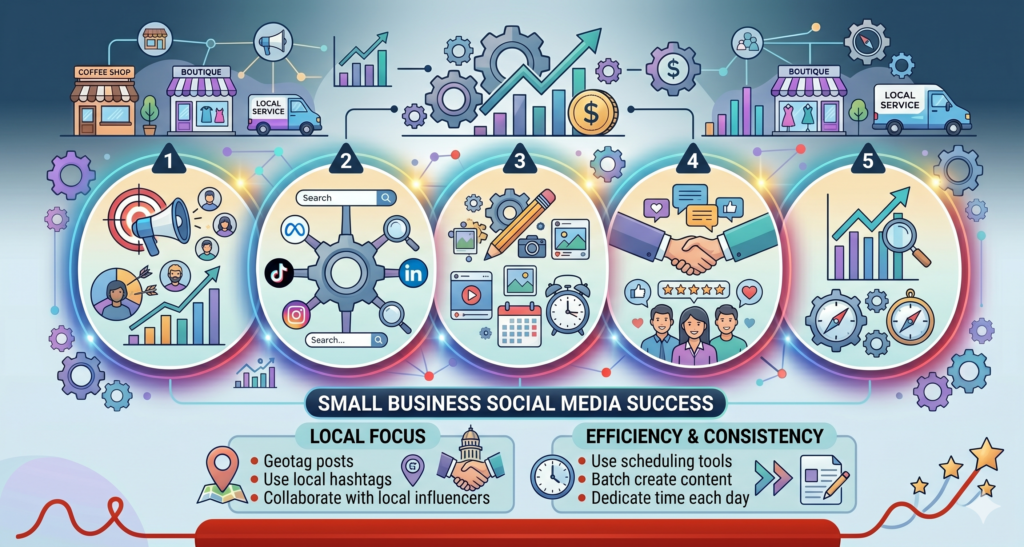
Creating a successful social media marketing plan for small business requires clear planning, audience understanding, and consistent execution to ensure long-term growth and improved engagement.
Define Your Business Goals
Start by identifying whether your goal is brand awareness, lead generation, or sales, as a clear objective is essential for building an effective social media strategy for small business.
Identify Your Target Audience
Understanding your audience’s age, interests, and behavior helps in creating content that resonates and improves engagement rate.
Choose the Right Social Media Platforms
Selecting the best social media platforms for small businesses ensures you focus on channels where your audience is most active.
Create a Content Strategy
A strong social media content strategy for small business includes educational, promotional, and engaging posts to maintain audience interest.
Plan a Content Calendar
A content calendar ensures consistent posting and helps maintain a structured social media marketing plan for small business.
Engage With Your Audience
Responding to comments, messages, and feedback builds trust and strengthens relationships with customers.
Analyze Performance & Optimize
Tracking metrics like engagement rate, reach, and conversion rate helps refine your strategy for better results.
Best Social Media Platforms for Small Businesses
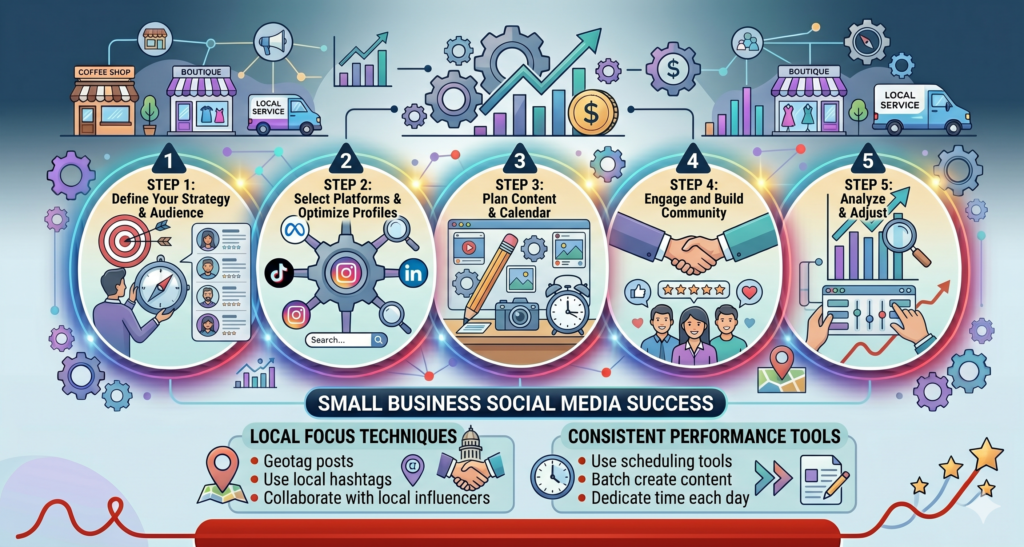
Choosing the best social media platforms for small businesses depends on your target audience, with Facebook and Instagram ideal for engagement, LinkedIn for B2B marketing, and TikTok for creative content and organic reach.
Content Ideas for Small Business Social Media Marketing
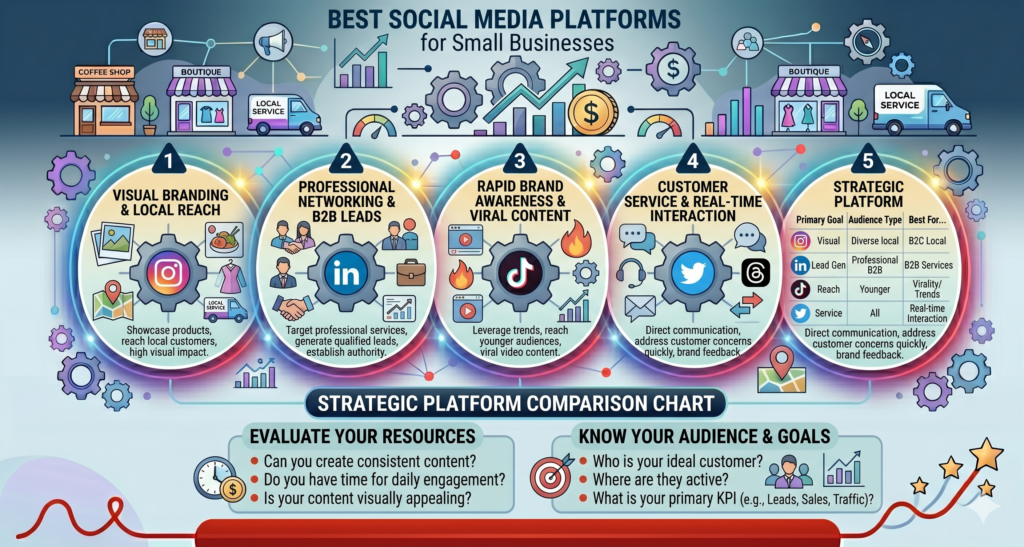
Effective social media marketing ideas for small business include behind-the-scenes content, customer testimonials, educational posts, product highlights, and short videos to boost engagement and brand awareness.
Low Budget Social Media Marketing Strategy for Small Businesses
A low budget social media marketing strategy focuses on organic reach, consistent posting, and targeted ads, allowing small businesses to grow without heavy investment while maximizing ROI.
Common Mistakes Small Businesses Should Avoid
Many businesses fail due to inconsistent posting, poor audience targeting, lack of content strategy, and ignoring analytics, which can weaken the overall social media strategy for small business.
Advanced Social Media Marketing Tips for Faster Growth
Advanced strategies include influencer collaborations, paid ads optimization, retargeting campaigns, and data-driven decision-making to accelerate results.
Tools for Social Media Marketing Success
Using tools for scheduling, analytics, and automation helps streamline processes and improve efficiency in executing a social media marketing plan for small business.
Future Trends in Social Media Marketing for Small Businesses (2026)
Future trends include AI-driven content creation, personalized marketing, short-form video dominance, and increased focus on data analytics to improve campaign performance.
FAQs About Social Media Marketing for Small Businesses
Small business owners often ask about posting frequency, platform selection, and costs, and the answer lies in building a consistent and optimized social media strategy for small business that delivers measurable results.
Conclusion
A well-structured social media strategy for small business is the foundation of sustainable growth in today’s competitive digital landscape, enabling brands to build awareness, engage audiences, and generate consistent leads without relying on massive budgets. By choosing the right platforms, creating valuable content, and continuously analyzing performance, small businesses can turn social media into a powerful marketing engine. The key is consistency, data-driven decisions, and adapting to trends, ensuring your social media strategy for small business evolves with changing audience behavior and platform algorithms.
FAQs
1. How do small businesses use social media marketing effectively?
Small businesses use social media marketing by creating a clear social media strategy for small business, focusing on targeted content, consistent posting, and engaging directly with their audience to build trust and drive conversions.
2. Which social media platform is best for small businesses?
The best platform depends on your audience, but Facebook and Instagram are ideal for most small businesses, while LinkedIn works best for B2B and TikTok is great for organic reach and creative content.
3. How often should small businesses post on social media?
Consistency matters more than frequency, but posting 3–5 times per week is generally effective for maintaining engagement and improving visibility.
4. What is the cost of social media marketing for small businesses?
Costs can range from very low (organic strategies) to higher budgets for paid ads, but a smart social media strategy for small business allows you to start small and scale as you grow.
5. How long does it take to see results from social media marketing?
Organic growth may take a few months, while paid campaigns can deliver faster results, especially when combined with a well-planned social media strategy for small business.