How AI Agents Are Moving from Cloud Tools to On-Device Power
The evolution of consumer and enterprise artificial intelligence has reached a critical inflection point. For the past several years, our interaction with AI has been defined by cloud-hosted "copilots

The evolution of consumer and enterprise artificial intelligence has reached a critical inflection point. For the past several years, our interaction with AI has been defined by cloud-hosted “copilots”—helpful digital assistants that wait for user prompts, answer queries, or draft text, but ultimately require constant manual guidance. Today, we are witnessing a fundamental shift from these passive helpers to active, autonomous systems known as Agentic AI. These next-generation AI agents are no longer restricted to simple single-turn conversations; they are capable of understanding context, planning complex sequences of tasks, and executing multi-step workflows with minimal human intervention.
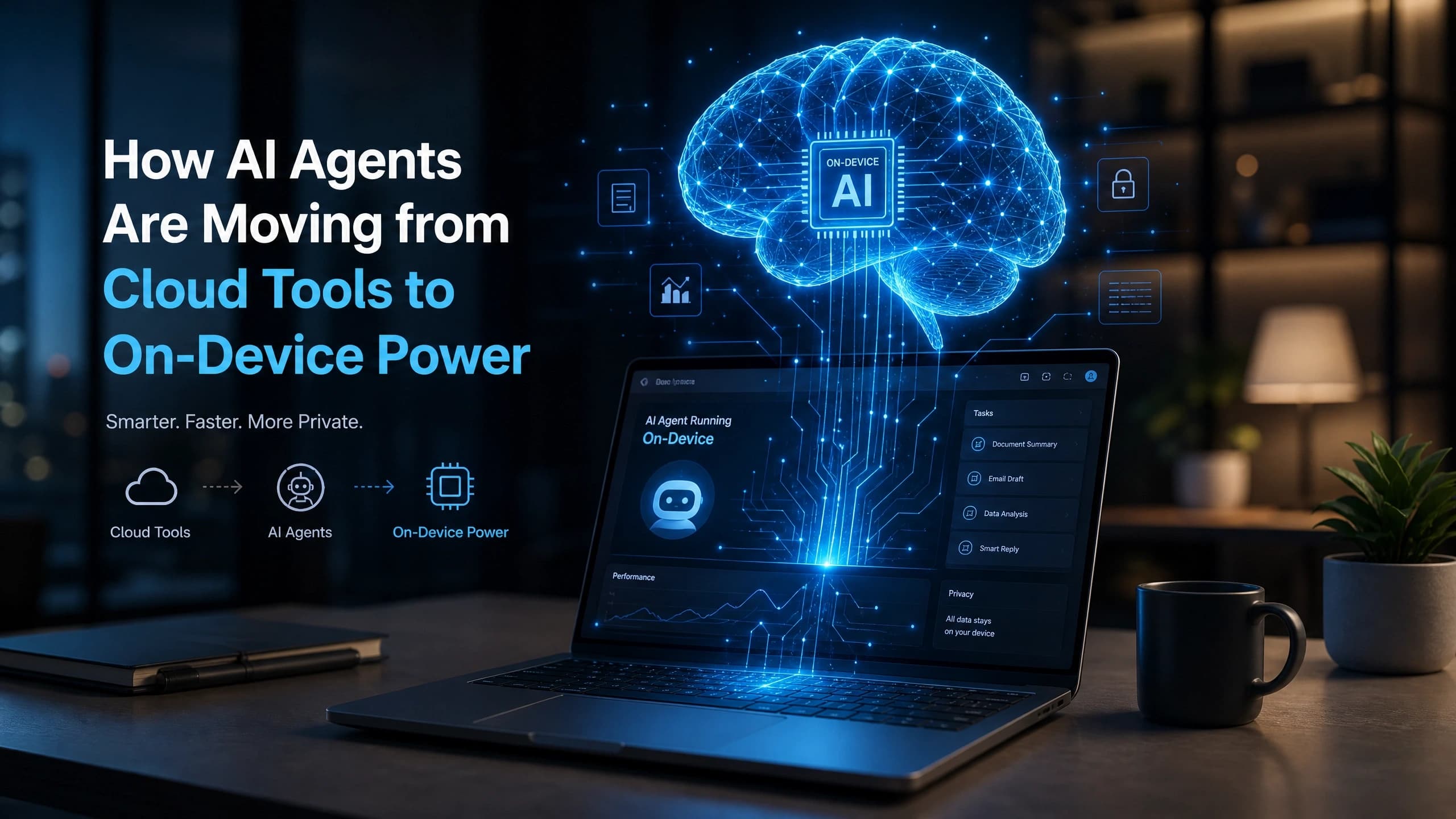
As these autonomous AI agents take on more sophisticated duties, a critical transition is happening behind the scenes: the migration of intelligence from massive, remote cloud data centers directly to the hardware on our desks and in our hands. Powered by advancements in Local AI, on-device AI, and edge AI, modern software is reclaiming local computing resources. This shift is fueled by the urgent need for absolute data privacy, ultra-low latency, and robust offline access. This migration is being accelerated by groundbreaking leaps in specialized AI hardware—such as high-performance Neural Processing Units (NPUs) and desktop-class unified memory architectures—making consumer computers fully capable of hosting secure, localized agentic systems.
In this comprehensive guide, we will analyze this monumental shift and explore how AI workflow automation is evolving. You will learn the core differences between cloud AI and local AI, how localized private AI models and local AI models are safeguarding sensitive enterprise data, and how technologies like edge computing are eradicating latency. We will also dissect the hardware developments driving this revolution—including Nvidia’s game-changing RTX architecture and the emergence of advanced Windows-native agentic runtimes—while evaluating the practical limitations of local deployment, the rise of self-correcting AI, and the inevitable hybrid future of future technology and AI software.
What Is Agentic AI?
At its core, Agentic AI represents a paradigm shift from reactive chatbots to proactive, goal-oriented digital workers. Unlike traditional static models, these AI-powered agents use multi-step reasoning to break down complex objectives into sequential, actionable steps. Equipped with the ability to call external APIs, read and write files, and interface directly with software applications, they handle end-to-end AI task automation and sophisticated AI workflow automation. Crucially, these systems function as autonomous AI capable of monitoring their own progress; through self-correcting systems, they can detect when an output does not match the desired outcome, troubleshoot the issue internally, and adjust their course of action dynamically to complete the assigned objective.
From AI Copilots to Autonomous AI Agents
The transition from AI copilots to fully autonomous AI agents represents a massive leap in software utility. Traditional AI copilots act as active autocomplete tools, requiring the user to remain firmly in the driver’s seat—generating a prompt, reviewing the response, copying the code, and manually pasting it into an editor. In contrast, Agentic AI takes the wheel by allowing users to define a high-level goal, after which the agent autonomously plans, executes, monitors, and adjusts multi-step AI workflows with minimal manual input. Instead of just helping you write an email, an autonomous agent can monitor your inbox, reference your local database, draft a personalized follow-up, update your CRM, and schedule a calendar invite—all within a single, self-directed workflow loop.
Why AI Agents Are Moving Beyond the Cloud
While cloud-based neural networks initially powered the generative AI boom, running autonomous workflows entirely in the cloud introduces severe friction points that are driving AI agents toward on-device AI and Local AI. For enterprises and power users alike, the cloud introduces massive bottlenecks: sensitive business data must be continuously transmitted to third-party servers, posing severe risks to data privacy. Furthermore, complex multi-step reasoning requires constant back-and-forth network requests, resulting in latency that slows down AI software automation to a crawl. By running agents locally on consumer computers equipped with modern AI hardware, organizations can secure complete offline access, enjoy instantaneous and low-latency AI responses, eliminate recurring API token costs, and maintain a highly secure sandbox for enterprise automation directly on physical devices.
Cloud AI vs Local AI: What Is Changing?
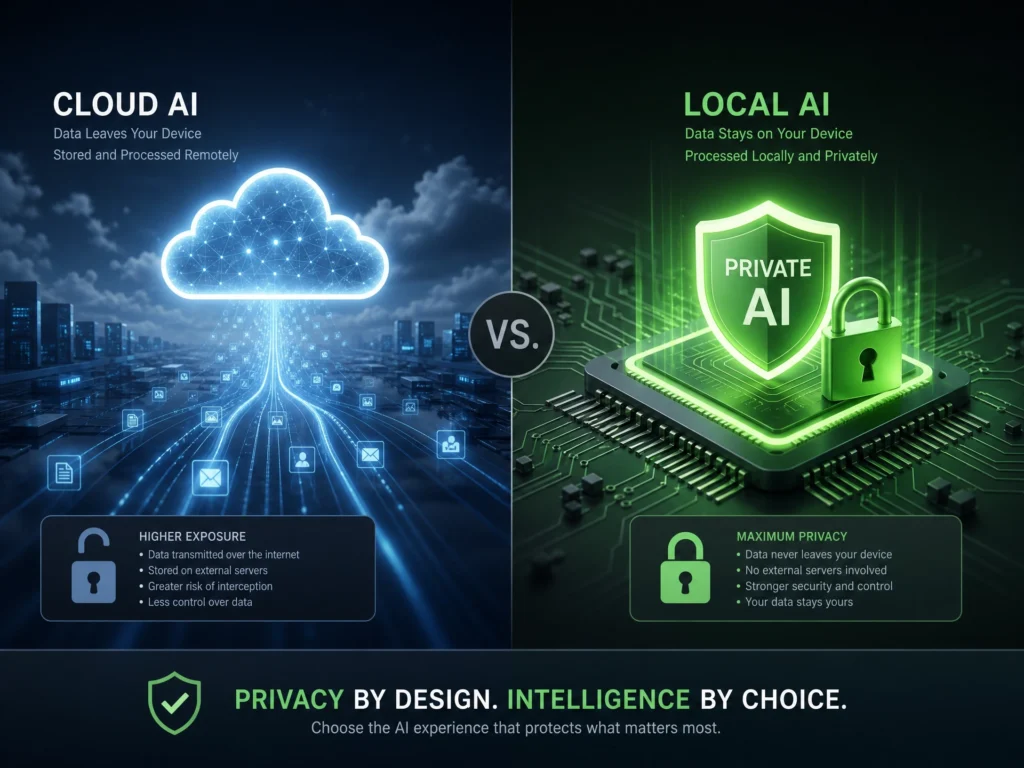
The historical divide of cloud AI vs local AI is rapidly dissolving as both paradigms find their unique equilibrium. Cloud-based AI remains an incredibly powerful and scalable resource, capable of hosting massive frontier models with hundreds of billions of parameters that require specialized server farms for deep analysis and centralized training. However, running every small productivity task through a distant cloud data center is both economically and operationally inefficient. On the other hand, local AI models provide unmatched privacy, speed, and granular control over local system environments. Rather than local AI completely replacing the cloud, the industry is transitioning toward intelligent hybrid AI systems as the definitive future of software—where lightweight local models handle immediate, highly sensitive on-device tasks while delegating massive, complex reasoning workloads to the cloud under strict secure protocols.
Key Technologies Powering On-Device AI Agents
1. Local AI Models
The core engine of on-device agency lies in highly optimized, specialized local AI models. Recent advancements in model quantization and pruning have allowed developers to shrink large language models into compact, highly capable Small Language Models (SLMs) that run seamlessly on consumer computers without sacrificing logical reasoning. Industry developments, such as Microsoft’s recently announced Aion 1.0 Instruct and Aion 1.0 Plan—a dedicated local model designed specifically for local agentic reasoning and tool-calling—demonstrate that a local device no longer needs to query the cloud to understand a user’s complex intent or orchestrate multi-step local tasks.
2. Edge AI and Edge Computing
To maximize the responsiveness of autonomous agents, modern architectures rely heavily on edge AI and edge computing. By shifting the computational workload to the network’s edge—meaning the physical laptop, workstation, or local office server—data is processed directly where it is generated. This architecture bypasses the physical limitations of fiber-optic transit times to remote data centers, drastically lowering latency. For AI-powered agents that must rapidly read on-screen UI elements, analyze user actions, and execute quick keyboard inputs in real time, edge computing provides the instantaneous feedback loop required to make agentic software feel fluid and natural.
3. AI Hardware and Consumer Computers
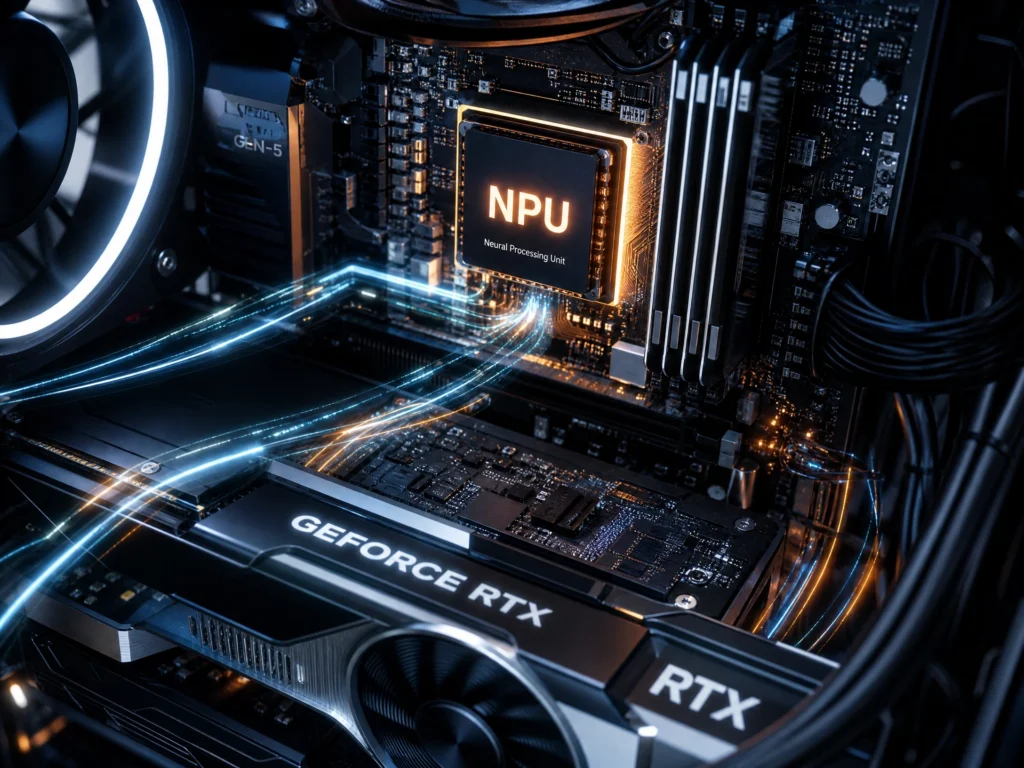
This localized software shift would be impossible without a simultaneous hardware revolution across consumer computers. Silicon manufacturers have spent the past several years integrating dedicated Neural Processing Units (NPUs) directly into consumer chipsets, establishing a standardized baseline of 40 to 50 TOPS (Trillion Operations Per Second) to power background OS tasks and lightweight productivity tools. When paired with high-bandwidth, unified system memory architectures (such as 32GB or more of RAM), modern consumer hardware completely bypasses traditional PCIe communication bottlenecks, allowing CPUs and local accelerators to feed data directly into private AI models with unprecedented efficiency.
4. Nvidia RTX AI and Local Acceleration
For workloads demanding massive local throughput, Nvidia RTX AI and dedicated GPU acceleration represent the gold standard of local processing. Unlike integrated NPUs designed for low-power background operations, Nvidia’s RTX-series graphics cards supply hundreds of TOPS of raw tensor compute, specifically accelerated by the CUDA and TensorRT software ecosystems. This immense computational ceiling enables consumer computers and local workstations to run sophisticated, highly parameters-dense models locally, accelerating everything from real-time developer code generation to heavy creative workflows in Adobe Creative Cloud and secure sandboxed databases, proving that local GPU acceleration is an indispensable pillar of professional-grade local agentic systems.
5. Large Language Models on Devices
Running Large Language Models locally is no longer a theoretical exercise but a practical reality. Thanks to specialized hardware-level optimizations, highly capable open-weights models (ranging from 8 billion to over 100 billion parameters) can run natively on high-end local workstations. While massive, trillion-parameter frontier models will still rely on massive cloud infrastructures for heavy lifting, optimized local models can handle the vast majority of day-to-day productivity tasks, such as summarizing long documents, parsing local codebase trees, and executing deterministic tool commands, without sending a single byte of data to external servers.
6. Multi-Step Reasoning and Autonomous Workflows
What truly separates an agent from a simple text predictor is its capacity for multi-step reasoning and autonomous workflows. When an agent is given a complex goal, it acts as an executive planner, utilizing frameworks like the Model Context Protocol (MCP) to interact with the local operating system, local databases, and files. The agent breaks down a task into discrete steps—such as searching a local folder, extracting table data, calculating financial changes, and updating an internal ledger—and executes each sub-task in sequence, transforming how we view human-computer interaction by shifting our role from active operators to supervisors.
7. Self-Correcting AI Systems
The true hallmark of reliable autonomous software is the integration of self-correcting capabilities. In traditional automation, a single broken API link or an unexpected file format will cause the entire script to crash. Self-correcting AI systems, however, actively review their own execution outputs against their original goals. If an agent attempts to open a local file and encounters an encoding error, it does not stop; it analyzes the error log, changes its parsing method, and retries the task. While human oversight remains essential for validating final high-stakes decisions, self-correcting mechanisms allow on-device agents to operate reliably in complex, unpredictable local environments.
How Agentic AI Changes Workflow Automation
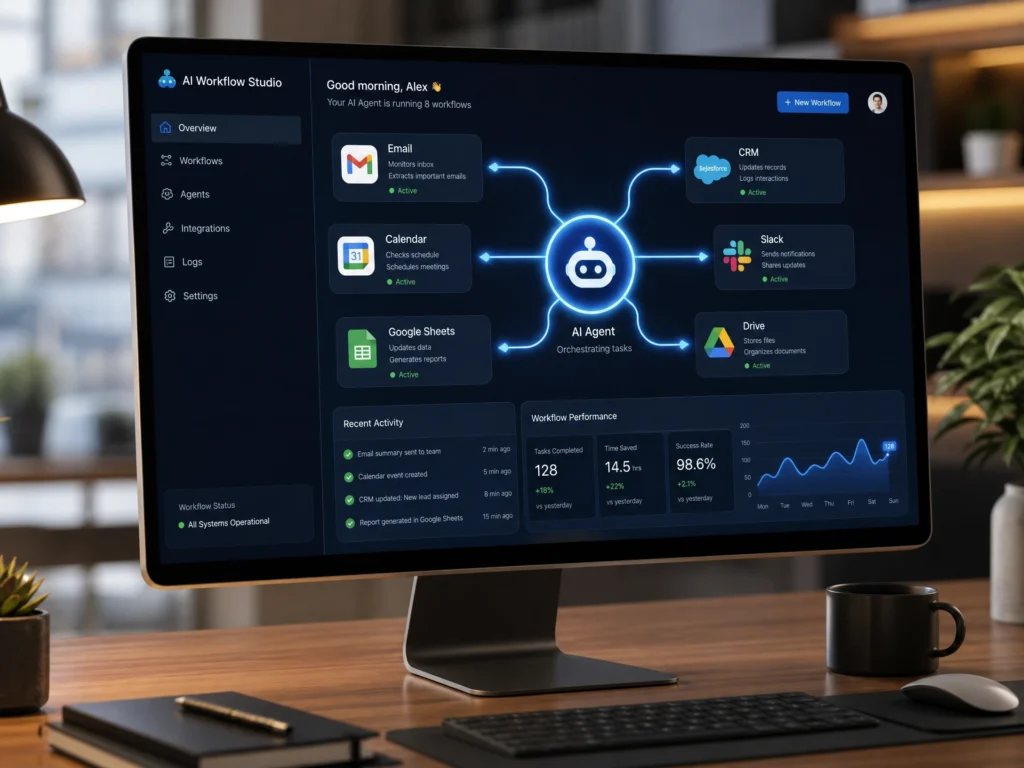
The introduction of Agentic AI fundamentally revolutionizes the landscape of AI productivity tools and traditional AI workflow automation. For years, business automation relied on rigid, “if-this-then-that” API recipes that broke at the slightest change in web layouts or data structures. By integrating on-device autonomous agents, businesses can transition to fluid, context-aware enterprise automation. These agents can seamlessly manage multi-app pipelines—independently conducting market research across local documents, updating central inventories via database automation, generating complex PDF reports, drafting context-rich customer support replies, and coordinating multi-department sales workflows—without requiring constant manual API configurations, saving countless administrative hours.
Private AI Models and Data Privacy
For modern enterprises, the strongest argument for deploying private AI models and local AI architecture is absolute data privacy. Sending proprietary intellectual property, highly confidential legal files, sensitive medical records, or detailed customer information to external cloud APIs exposes organizations to severe regulatory, cybersecurity, and compliance risks. By confining LLM inference to local corporate workstations or secure internal edge servers, organizations ensure that confidential data never leaves their physical custody. This secure framework allows legal, financial, and healthcare industries to safely utilize advanced AI software automation to analyze sensitive documents and streamline internal company workflows without violating strict compliance frameworks like GDPR, HIPAA, or corporate data-governance policies.
AI Software Automation on Consumer Computers
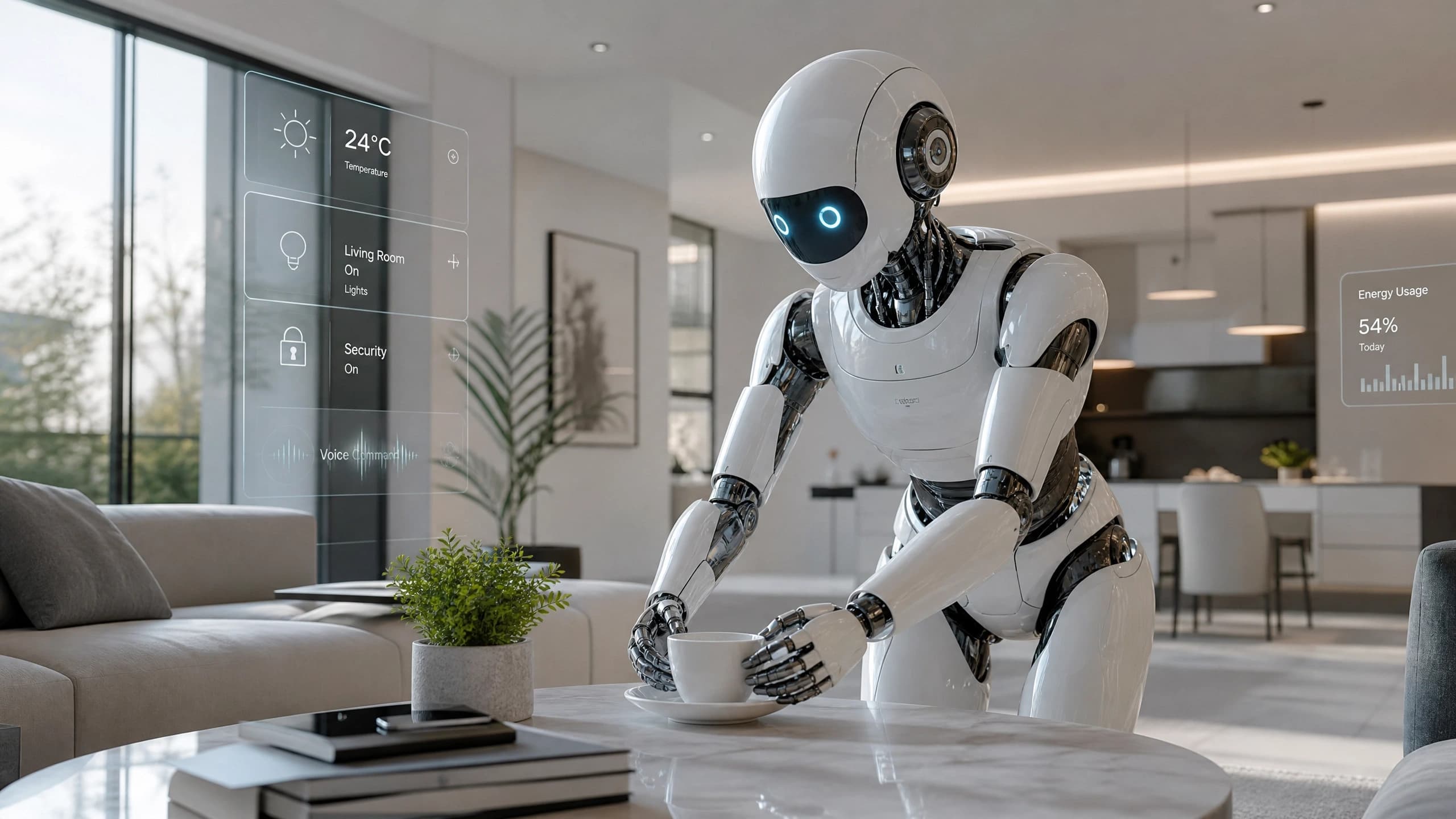
As AI agents gain direct access to our local operating systems, AI software automation on consumer computers is poised to redefine daily computer usage. Instead of operating inside an isolated browser tab, local agents can run as background services that interact directly with our local workspace environments. These agents will autonomously handle complex local file organization, execute secure semantic search across offline documents, assist developers with real-time localized coding tasks, draft hyper-personalized emails based on offline communications, and orchestrate automated creative workflows. With native OS-level integration, everyday computing is shifting from manually clicking through deep menus to simply collaborating with an on-device digital assistant that executes tasks directly on your local system.
Where On-Device AI Agents Can Be Useful
- Personal Productivity: Context-aware scheduling, action item extraction, and local note organization.
- Document Automation: Fast offline summarization, format conversion, and automated PDF report generation.
- Coding Assistance: Local repository parsing, offline code generation, and sandboxed debugging.
- Creative Editing: Real-time AI-assisted photo editing and video processing utilizing local GPU acceleration.
- Local File Search: Semantic search across years of local emails, notes, PDFs, and documents without cloud indexing.
- Email and Calendar Workflows: Local drafting, sorting, scheduling, and automatic response coordination.
- Customer Support Drafts: Safe generation of replies using locally stored, highly sensitive customer ticket databases.
- Database Automation: Secure, local parsing and updating of internal inventory, sales, and contact databases.
- Business Reporting: Gathering offline metrics to compile comprehensive financial and performance summaries.
- Offline AI Assistance: Seamless execution of language and planning models during flights or in areas without internet access.
- Privacy-Sensitive Workflows: Managing proprietary trade secrets, pre-patent research, and legal briefs locally.
- Enterprise Automation: Orchestrating complex, multi-application business workflows across closed-network corporate systems.
Benefits of Local AI and On-Device AI
- Better Data Privacy: Sensitive inputs are processed locally, ensuring data never leaves the user’s device.
- Lower Latency: Instant response times by removing network round-trips to distant cloud servers.
- Faster Response Times: High-performance local chips process inference rapidly, boosting agent fluidness.
- Reduced Cloud Dependency: Uninterrupted operations without worrying about cloud server outages or rate-limiting.
- Better Offline Access: Full access to intelligent agentic features without requiring an active internet connection.
- More Control Over Data: Complete ownership and governance of model inputs, corporate data logs, and system outputs.
- Lower Recurring API Costs: Eliminates per-token cloud API subscription costs for repetitive, high-volume tasks.
- Personalized Workflows: Models adapt specifically to local user behaviors, local apps, and immediate files.
- Stronger Enterprise Control: IT administrators can securely manage, lock down, and audit local model endpoints.
- Better User Experience: Deeper, more interactive integrations within local desktop operating systems and native applications.
Challenges of On-Device Agentic AI
Despite the clear benefits, transitioning AI agents to local hardware presents several significant hurdles that developers and enterprises must address. First and foremost, hardware limitations restrict on-device models; consumer laptops simply do not have the massive VRAM capacity required to run multi-hundred-billion parameter models, meaning they must rely on smaller, occasionally less accurate models. Furthermore, local model execution is incredibly demanding on system resources, leading to high energy usage, rapid battery life drain on mobile devices, and substantial local storage requirements to hold model weights. Organizations must also navigate complex software compatibility issues, high initial setup complexity, and ongoing update management to keep local models patched and accurate. Additionally, securing local devices against physical or network compromises becomes more critical when sensitive models and critical OS permissions are granted to local agentic tools.
Why Cloud AI Will Still Matter
While the shift toward localized computing is undeniable, cloud-based AI will remain an indispensable pillar of the broader technology ecosystem. Cloud infrastructures are unmatched in their ability to supply the massive compute power and massive VRAM necessary to train next-generation foundation models and host gargantuan, frontier-class models that require advanced reasoning. For massive enterprise scaling, centralized cloud platforms simplify model deployment, centralized updates, and multi-user collaboration across global teams. Complex, highly non-deterministic AI workloads that require checking massive external databases, executing large-scale batch processing, or conducting heavy cross-platform analytics will continue to live in the cloud, cementing a hybrid computing model where local and cloud AI work in perfect synergy.
The Future of AI Software
The future of AI software will not be a binary choice between the cloud and the device, but rather a seamless, unified hybrid ecosystem. In this new paradigm, cloud AI, Local AI, on-device AI, edge AI, AI agents, and autonomous software work together dynamically to deliver a fast, secure, and incredibly capable digital work environment. Intelligent local orchestration layers will act as traffic controllers—automatically deciding whether to execute a simple task locally using an efficient small language model, run an on-screen agentic task using local GPU acceleration, or delegate a highly complex, multi-layered reasoning problem to a secure cloud-hosted frontier model. This collaborative, multi-tiered architecture represents the next major evolution in computing, changing how we interact with technology forever.
Agentic AI Checklist for Businesses
- Identify repetitive workflows: Map out predictable, time-consuming digital tasks suitable for automation.
- Decide which tasks need cloud AI: Allocate high-reasoning, creative, or massive data-crunching tasks to cloud models.
- Decide which tasks need local AI: Route highly sensitive, offline, or low-latency operations to on-device hardware.
- Protect sensitive data: Implement strict data governance to ensure proprietary files remain strictly offline.
- Test private AI models: Run pilot programs with optimized open-weights models (e.g., Llama-3, Phi-3, Aion) in sandbox environments.
- Evaluate AI hardware needs: Audit current corporate hardware fleets to verify NPU and GPU capacities (e.g., 40+ TOPS, 32GB+ RAM).
- Set human approval points: Establish critical “human-in-the-loop” checkpoints before agents execute financial or external communications.
- Monitor AI workflow accuracy: Implement automated logging to audit agent success rates and identify logic bottlenecks.
- Build self-correcting processes carefully: Design fallback loops so agents can safely handle and recover from system errors locally.
- Secure local devices: Implement robust device-level security (e.g., local sandboxes, Intune policies, Bitwarden Agent Access SDK) to manage agent permissions.
- Train teams on AI tools: Educate employees on how to prompt, monitor, and collaborate with autonomous agents safely.
- Measure productivity gains: Track time saved, error rate reductions, and operational cost savings to calculate ROI accurately.
Final Thoughts
The migration of Agentic AI from isolated, cloud-bound tools to autonomous, on-device power marks a historic turning point in personal and enterprise computing. By combining the immediate responsiveness of Local AI and edge AI with the raw computing power of modern consumer AI hardware, we are moving past passive chat interfaces into an era of truly proactive, autonomous digital workers. While challenges in local hardware capacity, power consumption, and security governance remain, the emergence of optimized private AI models, high-end local acceleration like Nvidia RTX AI, and secure local agent frameworks will continue to accelerate this transition. For businesses and technology enthusiasts alike, embracing this hybrid future of software and autonomous workflows is no longer just a way to improve efficiency—it is the definitive path to unlocking the next generation of absolute data privacy and intelligent AI automation.